Quick answer
Industrial structural steel work covers platforms, mezzanines, pipe racks, stairs, equipment supports and crane-related structure fabricated and erected inside operating plants. We build from engineer-stamped drawings, weld to AWS D1.1 or the project specification, plan tie-ins to existing steel around hot work rules and turn over inspection records with the finished structure.
Key points
Fabricated from engineer-of-record drawings, with RFIs in writing when details are unclear
Welding to AWS D1.1 and the project specification, including prequalified or qualified procedures
Shop prefabrication sized to the crane, the access path and the outage window
Tie-ins to existing plant steel planned around hot work permits and live equipment
Inspection records, material certifications and as-built notes at handover
What industrial structural steel covers in a working plant
In a plant, structural steel is everything that holds up people, product and equipment. That includes operator platforms and catwalks around tanks and vessels, mezzanines over production lines, pipe racks and cable tray supports, stair towers, ladders with cages, and the frames that carry pumps, motors, fans and conveyors.
Typical members are wide-flange beams in ASTM A992, plate and angle in A36 or A572 Grade 50, and hollow structural sections in A500. Floors are usually bar grating or checkered plate, with toe plate and handrail around open edges. Connections are a mix of bolted and welded, chosen by the engineer for load, fit-up and erection practicality.
Much of this steel is modest in tonnage but high in consequence. A platform with a bad weld at a beam seat or a handrail post that tears out under load is a safety failure, not a cosmetic one, which is why the details get as much attention as the large members.
Operator platforms, catwalks and crossovers
Mezzanines and equipment decks
Pipe racks, sleepers and cable tray supports
Stair towers, ladders, cages and handrail systems
Pump, motor, fan and conveyor support frames
Monorail and hoist support steel designed by your engineer
Which codes govern structural welds in an industrial facility?
For steel buildings and plant structures, welding is most often governed by AWS D1.1, Structural Welding Code - Steel, with design and fabrication tied to the AISC Specification for Structural Steel Buildings and the AISC Code of Standard Practice. Aluminum structures fall under AWS D1.2 and stainless under AWS D1.6. Your project specification decides which edition and which owner requirements apply.
D1.1 allows prequalified welding procedures when joint geometry, base metal and filler fall within its limits, and it requires qualified procedures when they do not. It also sets minimum preheat based on steel grade and thickness, along with visual acceptance criteria. Where the engineer calls for ultrasonic or magnetic particle testing on critical joints, that examination is usually done by an independent inspection firm.
Some structures carry additional requirements. Buildings in high seismic regions may invoke AWS D1.8 for seismic force resisting systems, although most Texas sites fall in low seismic design categories. On the coast, around Corpus Christi and Freeport, hurricane wind loads set by the engineer of record usually matter more. Steel erection on construction sites falls under OSHA 1926 Subpart R. We confirm which documents apply before pricing, and we recommend confirming building permit requirements with your local code official for any work outside the plant fence line.
Shop fabrication versus field erection
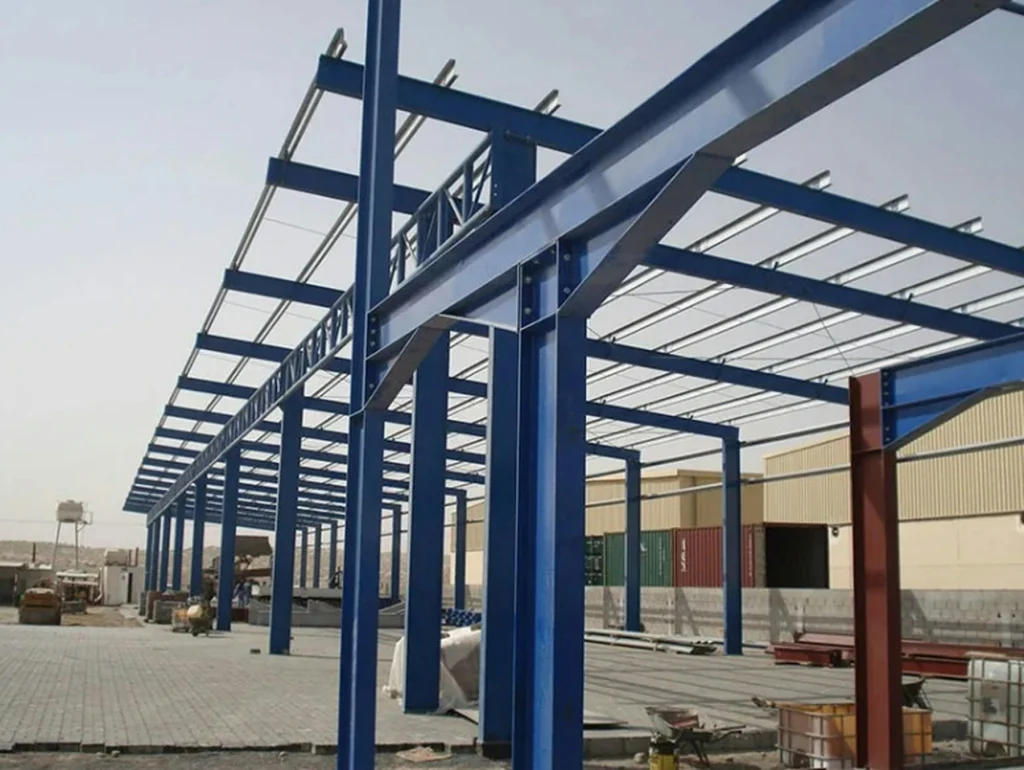
The cheapest, best-quality weld is the one made flat in the shop. Positioning, controlled conditions and easy inspection all favor prefabrication, so we design the shipping breaks to move as much welding as possible off site. A platform might arrive as three bolted modules instead of a pile of loose members.
The limits come from logistics. Each assembly has to fit on a truck, under the available crane or hoist, and through the access route inside the plant. We review those constraints with your team early, often with a site walk, because a perfect assembly that will not fit through a pipe rack opening is no help during an outage.
Field welding still has a role: tie-ins to existing steel, closure pieces cut to as-found dimensions and modifications to structures that cannot be removed. Those welds are planned in detail because they happen under hot work permits, at height and next to equipment that may be live.
Tying new steel into existing plant structure
Existing steel is the hardest part of most plant structural jobs. Drawings may be missing or out of date, members may have been modified over decades, and the steel grade is often unknown. Older steels can have higher carbon content than modern grades, which raises cracking risk if they are welded without adequate preheat.
When the grade cannot be confirmed from records, we raise it with the engineer of record. Options include sampling for chemical analysis, assuming a conservative carbon equivalent and preheating accordingly, or switching to a bolted connection that avoids welding on questionable material. Lead-containing coatings must be tested and removed under appropriate controls before any heat is applied.
We also check what the existing member is doing. Welding on a beam that is carrying live load, or near a vessel nozzle or electrical tray, requires temporary shoring, shielding or a revised sequence. Those decisions are made before the permit is issued, not while the crew is waiting.
How much does industrial structural steel cost?
We do not publish prices because two platforms of the same footprint can differ widely in cost. The biggest drivers are connection complexity, the share of field welding versus shop welding, access and crane requirements, coating systems and the amount of inspection the specification requires.
Plant conditions add real hours. Permit cycles, gas testing, standby fire watch, restricted work hours and travel between gate and work area all reduce productive welding time, and an honest quote accounts for them. Night or weekend work to protect production carries premium labor, and the itemized quote shows it separately. Our approach to planning around downtime explains why we price this way.
Tonnage and the number of distinct pieces and connections
Bolted versus field-welded connections
Galvanizing, shop primer or multi-coat paint systems
Required examination, such as UT or MT on critical welds
Crane, lift equipment and access constraints
Shift work, outage windows and site safety requirements
How a structural steel job works with Industrial Welding
01
Drawing and spec review
We review stamped drawings, the specification and site constraints, then send RFIs on unclear connections, grades or coating requirements before pricing is final.
02
Detailing and materials
Shop drawings or cut lists are prepared, mill certifications are collected with the steel, and shipping breaks are set by crane capacity and access.
03
Fabrication and checks
Members are cut, fitted and welded to the procedure, then dimensionally checked and inspected before coating and loading for delivery.
04
Erection and turnover
Field crews erect under your permits, complete tie-ins and touch-up, coordinate any third-party testing and hand over the documentation package.
Coatings and corrosion protection for plant steel
Plant atmospheres are hard on steel. Chemical exposure, washdown water, salt air near the coast and condensation around cooling equipment all attack bare or poorly coated surfaces. The coating decision should be made with the fabrication plan, because it affects how pieces are detailed and shipped.
Hot-dip galvanizing gives durable protection for grating, stairs and handrail, but parts must be detailed with vent and drain holes and sized for the kettle. Painted systems need surface preparation to the specified standard and must be held back from field weld zones. After erection, field welds and damaged areas are cleaned and touched up with a compatible system so the protection is continuous.
Inspection, documentation and handover
Every weld is visually inspected against the acceptance criteria in the governing code. Where the specification requires nondestructive examination, we coordinate access and sequence with the inspection firm so testing does not hold up erection, and we repair and re-examine any rejected weld before the area is turned over.
Handover typically includes material test reports, the welding procedures used, inspection results, bolt tightening records where applicable and redlined drawings showing as-built changes. That package matters later, when your team plans the next modification and needs to know exactly what is in the air.
If the structure supports piping, see our industrial pipe welding service; for supports that are part of an outage scope, our plant maintenance welding crews often install them alongside other repair work.
Frequently asked questions
Can you fabricate structural steel without stamped drawings?
For anything that carries people, equipment or significant load, we need drawings from a licensed engineer. We can work from your existing engineer's design or recommend that you engage one. For simple non-structural items such as equipment guards or small brackets, a dimensioned sketch is often enough, and we will tell you when the scope crosses into engineered territory.
Do you weld to AWS D1.1?
Yes. Most of our industrial structural steel is built to AWS D1.1 using prequalified procedures where the joint, base metal and filler fit the code's limits, and qualified procedures where they do not. If your specification calls for a different code, such as D1.2 for aluminum or D1.6 for stainless, tell us when you request a quote.
Can you install steel while the plant is running?
Often, yes. Many platforms, pipe racks and supports can be installed in running areas under hot work permits with spark containment, fire watch and coordination with operations. Work over or next to live process equipment may need a short outage or a revised sequence. We plan these details with your operations team during the site walk.
Should plant steel be galvanized or painted?
It depends on the environment, the appearance you need and how pieces will be connected. Galvanizing suits grating, stairs and handrail in wet or corrosive areas and needs little maintenance. Painted systems suit large members, color-coded areas and items too large for a galvanizing kettle. Field welds on either system need proper touch-up afterward.
How do you handle unknown existing steel?
We treat it cautiously. If the grade cannot be confirmed from drawings or records, we raise it with your engineer and choose a path: chemical testing, a conservative preheat based on an assumed carbon equivalent, or a bolted connection that avoids welding. Coatings are tested for lead before any heat is applied.
Who performs ultrasonic or magnetic particle testing?
Nondestructive examination required by the specification is usually performed by an independent inspection company hired by the owner or by us, depending on the contract. We coordinate access and timing so testing does not stall erection, repair any rejected welds and support re-examination until each joint is accepted.