Quick answer
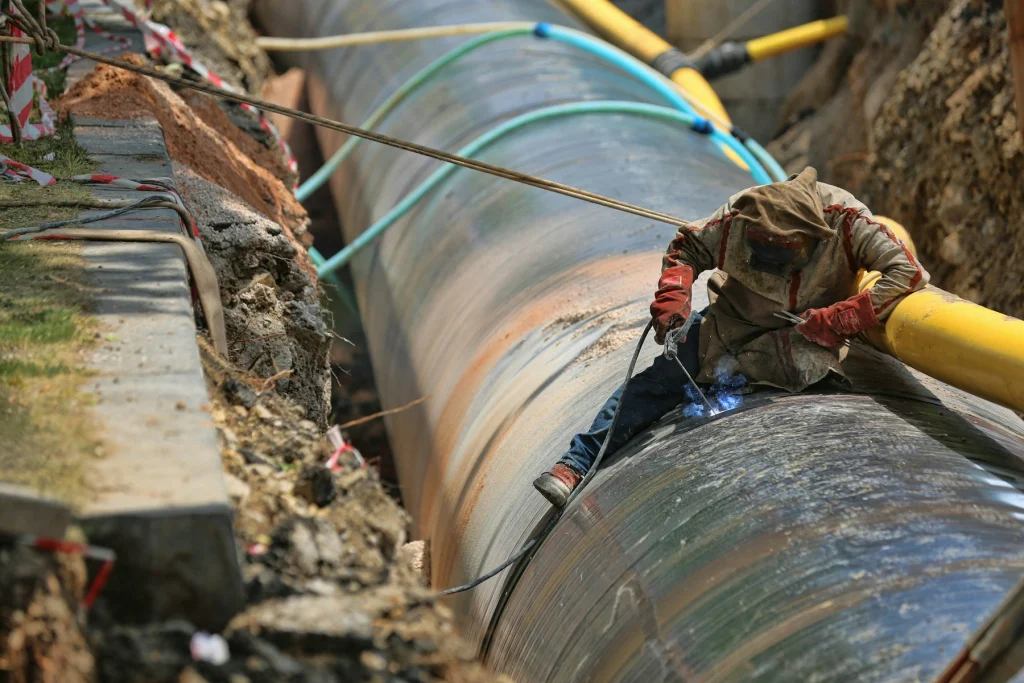
Tank repair welding restores and modifies non-code tanks, hoppers, bins, chutes and atmospheric vessels: patching corroded or worn shells, adding nozzles on non-code equipment, replacing cones and supports, and installing ladders and platforms. Code-stamped pressure vessels and in-service storage tanks governed by API 653 require authorized organizations and inspectors, and we tell you when that applies.
Key points
Non-code tanks, hoppers, bins, silos, chutes and atmospheric process vessels
Shell patches, cone and bottom replacement, nozzles and manways on non-code equipment
Supports, saddles, legs, ladders, cages and platforms
Cleaning, gas-freeing and confined space entry planned with your team
Clear guidance when ASME, NBIC or API 653 requirements apply
Where non-code tank work ends and code work begins
This is the first question on every tank job, so we address it before anything else. Pressure vessels built and stamped under ASME Section VIII are repaired and altered under the National Board Inspection Code, which generally requires an organization holding a National Board R certificate and involvement of an authorized inspector. We do not hold that authorization and do not perform code repairs on stamped vessels.
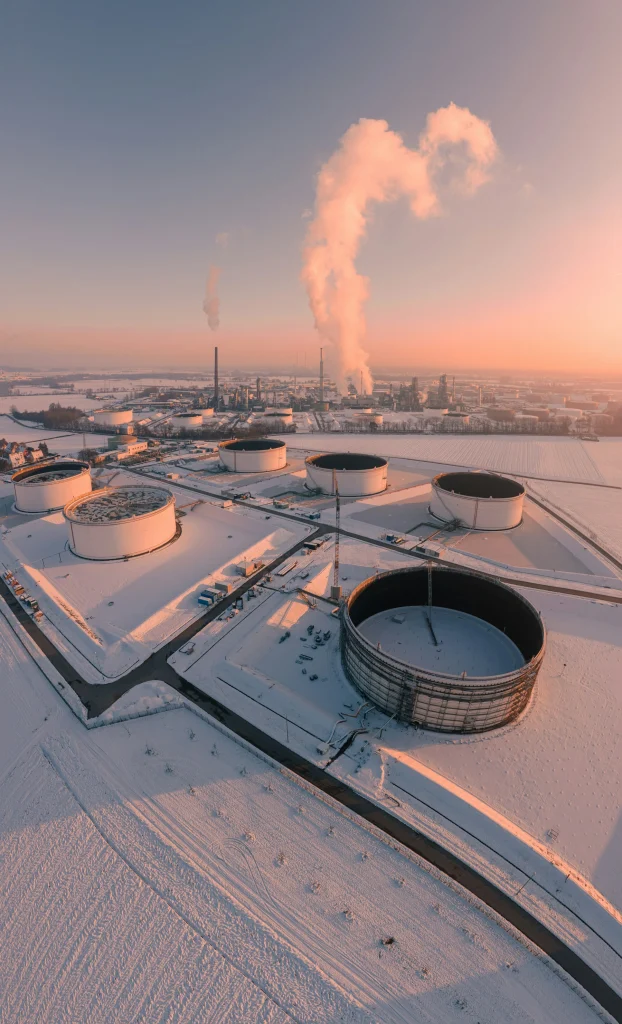
Field-erected atmospheric storage tanks built to API 650 are commonly inspected, repaired and altered under API 653, with an authorized inspector defining and accepting the work. Tanks in regulated service may also be subject to environmental rules. Check with your inspector before scheduling any welding on these tanks.
That leaves a large category of equipment where qualified welding without a code stamp is appropriate: bulk solids hoppers and bins, non-code water and process tanks, chutes, cyclones, dust collector housings, mixing vessels at atmospheric pressure and the external structure on almost any tank. If you are unsure which category your equipment falls into, send the nameplate photo and we will help you sort it out.
Common tank, hopper and bin repairs
Most repairs come from three causes: corrosion, abrasion and mechanical damage. Corrosion attacks the bottoms and lower shells of liquid tanks and the areas around nozzles and supports. Abrasion wears through cones, discharge areas and impact zones on bulk solids hoppers. Mechanical damage comes from vibrators, hammering, impacts from mobile equipment and failed supports.
The repair method depends on extent. Small holes and local wear get a properly sized patch or insert plate. Widespread thinning on a cone or bottom calls for section replacement. Wear-prone zones often benefit from bolted or welded liner plates in abrasion-resistant steel so the shell itself is protected in future.
Shell and cone patches, insert plates and section replacement
Hopper discharge, gate and transition repairs
Wear liners in AR plate or other abrasion-resistant materials
Leg, saddle, skirt and anchor repairs
Roof and manway repairs on non-code tanks
Vibrator mounts, bin activator brackets and level sensor ports
Cleaning, gas-freeing and safe entry before welding
Welding on or inside a tank that held fuel, solvent, product dust or residue is one of the most hazardous jobs in industrial welding. Explosions during hot work on supposedly empty tanks are a well-documented cause of serious injuries. Before any heat is applied, the tank has to be emptied, cleaned, isolated and tested.
Isolation means physically disconnecting or blanking lines, not just closing valves, along with lockout of agitators, conveyors and feeders. Atmospheric testing for oxygen, flammable vapors and toxics is done before entry and before hot work, and repeated or monitored continuously during the job. Residue trapped under scale, in seams or behind liners can release vapor when heated, so cleaning has to be thorough.
Interior work is almost always permit-required confined space entry, with an attendant, ventilation and a rescue plan. These steps are planned with your safety team and listed in the quote, because they often take as long as the welding itself.
Adding nozzles, brackets and supports
Plants frequently need new connections or attachments on existing equipment: a new inlet or outlet, a level sensor port, an inspection door, agitator mounts or brackets for walkways and conduit. On non-code equipment, nozzle and opening design should still follow sound engineering practice, with reinforcement around larger openings and attachment welds that do not create stress concentrations on thin shells.
Brackets and clips are welded to reinforcing pads rather than directly to thin shell plate where loads warrant it, and pad corners are rounded to spread load. On tanks that are lined or coated internally, external welding can still damage the lining, so we confirm what is inside before heating the shell.
For the walkways, ladders and platforms that attach to tanks, see our industrial structural steel service, and for piping connected to new nozzles, see industrial pipe welding.
How is corrosion damage on a tank assessed?
Visual inspection shows where to look, but it does not show how much steel is left. Ultrasonic thickness gauging measures remaining wall at points or along grids, and the readings tell us whether a local patch is enough or whether a wider section is too thin to hold a weld reliably.
Welding a patch onto steel that is badly thinned around the patch simply moves the leak a few inches. We map thickness beyond the visible damage, compare it with the original or required thickness and recommend a repair boundary that lands on sound metal. For equipment under a formal inspection program, the inspector's findings govern the repair scope.
How a tanks & vessels repair job works with Industrial Welding
01
Identify and classify
We review nameplate data, drawings and photos to confirm whether the equipment is non-code and suitable for our scope, or needs an authorized shop.
02
Inspect and measure
Damage is inspected and wall thickness is mapped with ultrasonic gauging to set repair boundaries on sound metal.
03
Prepare and repair
After cleaning, isolation and gas testing, patches, sections, nozzles and supports are installed under your permits.
04
Test and restore
Welds are inspected and leak-tested as specified, coatings are restored and a repair record is provided.
Can a leaking tank be repaired by welding?
Often, yes, provided it is a non-code tank, the surrounding metal is sound, and the tank can be properly emptied, cleaned and released for hot work. Leaks at welded seams, nozzle connections and small corrosion pits are common candidates for weld repair.
Welding is not appropriate on a tank that cannot be gas-freed, on a code vessel without the required authorization, or on a shell so thinned that new weld metal cannot fuse into sound steel. In those cases the options are section replacement, an engineered alternative or replacing the tank. We tell you which category your leak falls into after inspection, not after the work starts.
Testing and recoating after tank repair welding
Repaired welds are visually inspected, and depending on service may be checked with dye penetrant, magnetic particle or vacuum box testing on bottoms and lap seams. Liquid tanks are commonly leak-tested by filling with water and observing for a set period before returning to product service; your inspector or engineer sets the method and duration.
Coatings and linings damaged by welding must be repaired to the original system. Internal linings often need surface preparation and application by a lining specialist, and we schedule that work into the repair plan. External coatings around patches and new attachments are restored so the repair does not become the next corrosion site. Planned outages through our plant maintenance welding service are often the best time to combine tank repairs with other work.
Frequently asked questions
Do you repair ASME pressure vessels?
No. Repairs and alterations to ASME code-stamped pressure vessels generally require an organization holding a National Board R certificate, with an authorized inspector involved. We focus on non-code equipment and on external structure such as supports, ladders and platforms. If your vessel is stamped, we can help you identify the right type of shop.
What is non-code tank repair?
Non-code tank repair covers equipment that was not built or stamped to a pressure vessel or storage tank code, such as bulk solids hoppers, bins, chutes, atmospheric process tanks and many water tanks. The work still follows qualified welding practice and sound engineering, but without code stamping or authorized inspector involvement.
Can you weld on a tank that held fuel or chemicals?
Only after it has been emptied, cleaned, isolated and tested free of flammable vapors, with hot work and confined space permits issued by your site. Residue in seams and under scale can release vapor when heated, so thorough cleaning is essential. If a tank cannot be reliably gas-freed, welding should not proceed.
How do you know how big a patch should be?
We measure remaining wall thickness with ultrasonic gauging beyond the visible damage and set the repair boundary on metal that meets the required thickness. A patch that lands on thinned steel tends to fail again at its edges. On equipment under a formal inspection program, the inspector's findings decide the repair boundary.
Can you add a nozzle to an existing hopper or tank?
On non-code equipment, yes. We cut the opening, add reinforcement where the size and loads require it, and weld the nozzle or port with a procedure suited to the shell material. Internal linings and coatings are checked first, since welding heat can damage them. Added nozzles on code tanks must go through the applicable code process.
Do you install wear liners in hoppers and chutes?
Yes. Abrasion-resistant liners in AR plate are a common way to protect hopper cones, discharge areas and chute impact zones. Liners can be welded or bolted depending on how often they will be replaced. Bolted liners make future changeouts faster, which helps during short maintenance windows.