Home / About
About Industrial Welding
We fabricate, install and repair heavy steel for operating facilities. Our work is judged by whether it passes inspection, goes in without incident and lets the plant restart on time.
Quick answer
Industrial Welding is a Texas-based industrial welding contractor that fabricates and repairs structural steel, process pipe, heavy equipment, production weldments and non-code tanks for plants, refineries, fabricators and contractors. We work from your drawings and specifications, plan around shutdown windows, follow your site safety program and hand over the records your inspectors expect.
Most of our requests come from people who answer for a facility: maintenance managers, reliability engineers, turnaround planners and plant superintendents. They need a crew that understands permits, isolation and production pressure without a long orientation on why those things matter.
We also support general and mechanical contractors who need a welding subcontractor for a defined scope, fabrication shops that need overflow capacity on a tight run, and equipment owners in aggregates, agriculture and construction who need iron rebuilt instead of replaced.
The common thread is consequence. When a platform, pipe spool or bucket fails in an industrial setting, the cost is measured in lost production and safety exposure, not just a repair bill. That is the type of work we set ourselves up to do well.
Refineries, chemical plants, terminals and midstream facilities
Manufacturing plants, food processors and distribution centers
Mining, aggregates, cement and heavy civil operators
General contractors, mechanical contractors and fabricators
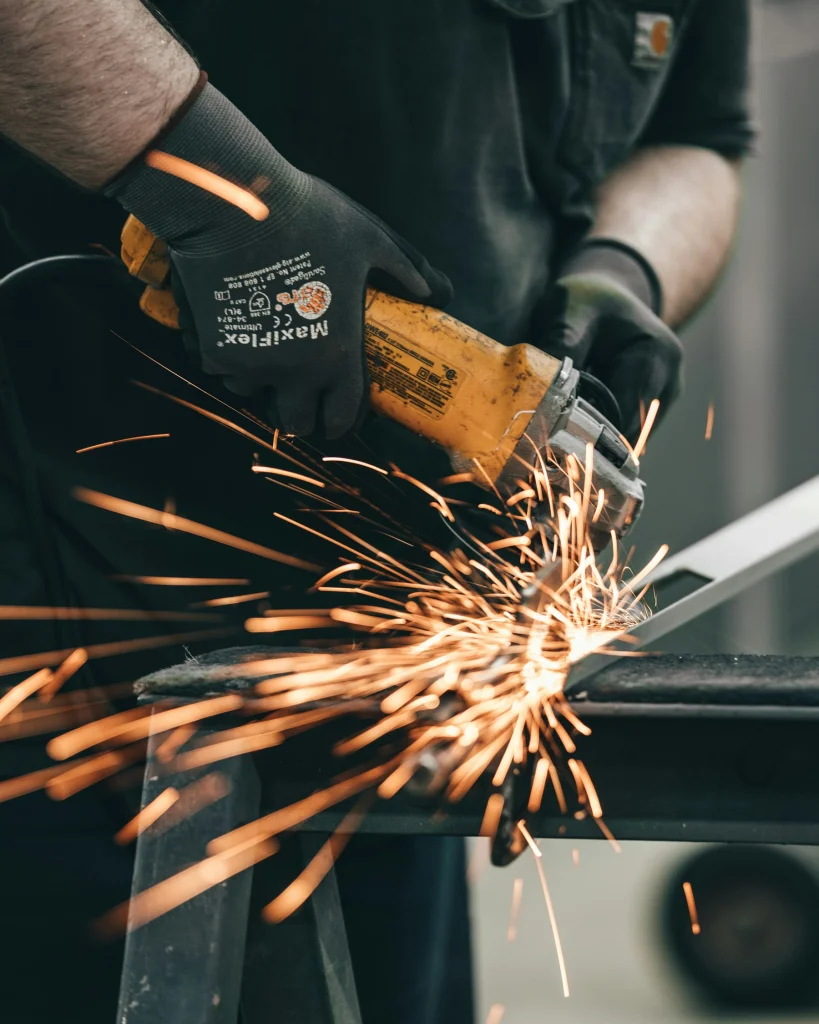
Industrial welding is rarely a matter of taste. Structural steel usually falls under AWS D1.1 and the project specification, process piping commonly follows ASME B31.3 with procedures and welders qualified under ASME Section IX, and owners often layer their own standards on top. We read the spec before we price the job, because the governing code changes the procedure, the inspection and the paperwork.
When a drawing is silent, we ask rather than guess. Questions about electrode classification, preheat, joint design or examination percentage go back to the engineer of record or the owner's representative in writing, and the answer becomes part of the job file.
We are equally direct about limits. Repairs and alterations to ASME code-stamped pressure vessels require an organization holding the appropriate National Board authorization, and in-service storage tanks are often governed by API 653 with an authorized inspector involved. If your job crosses that line, we say so at the quote stage and explain where our non-code tank and vessel repair scope stops.
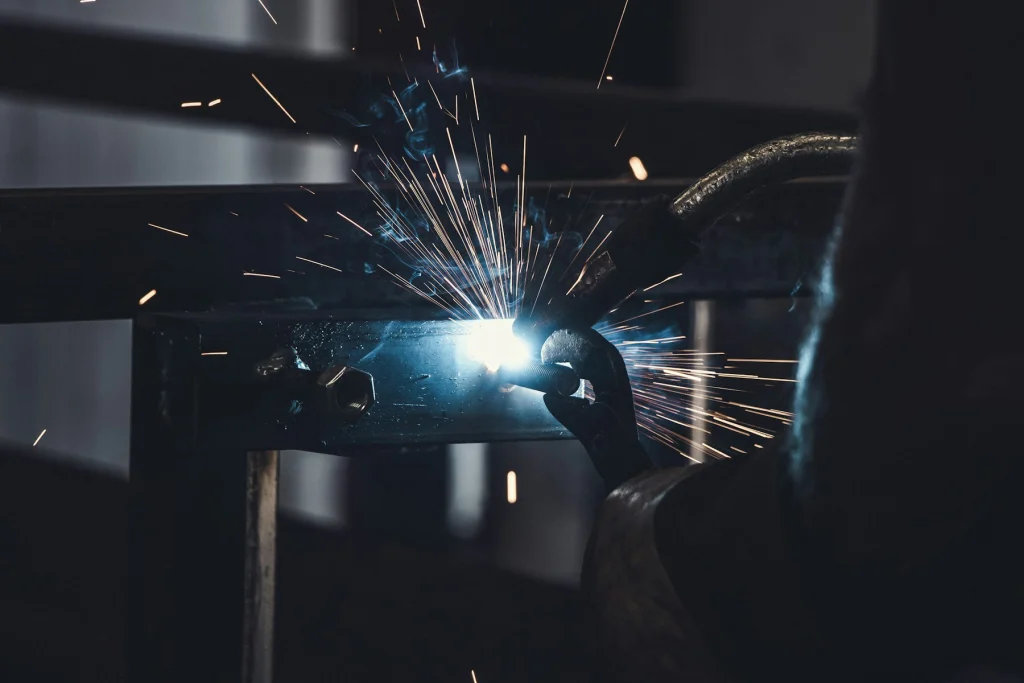
Every industrial welding job is hot work, and many involve elevation, confined spaces or stored energy. Our crews work under your permit system: job safety analysis before the first cut, gas testing where required, fire watch coverage, and lockout and tagout that the crew verifies rather than assumes.
We bring the controls the job calls for, including spark containment, welding screens, fume extraction for enclosed areas and fire-resistant clothing. Site-specific orientations, badge processes and drug and alcohol requirements are part of how we plan crew assignments, so tell us about them when you request a quote.
Anyone on our crew can stop the work if conditions change. A delayed weld costs minutes. An incident in an operating unit costs far more, for everyone.
For most of our customers the welding is not the expensive part; the outage is. So we push as much work as possible into the shop before the unit comes down. Pipe spools, platform sections, chute liners and equipment brackets are fabricated, checked against field measurements and staged so the crew installs instead of builds.
During a shutdown we plan by the hour, with materials kitted, consumables stored correctly and a clear sequence agreed with your planner. We also price contingency honestly. Opened equipment often reveals more damage than the inspection report predicted, and the time to decide how that gets handled is before the outage starts.
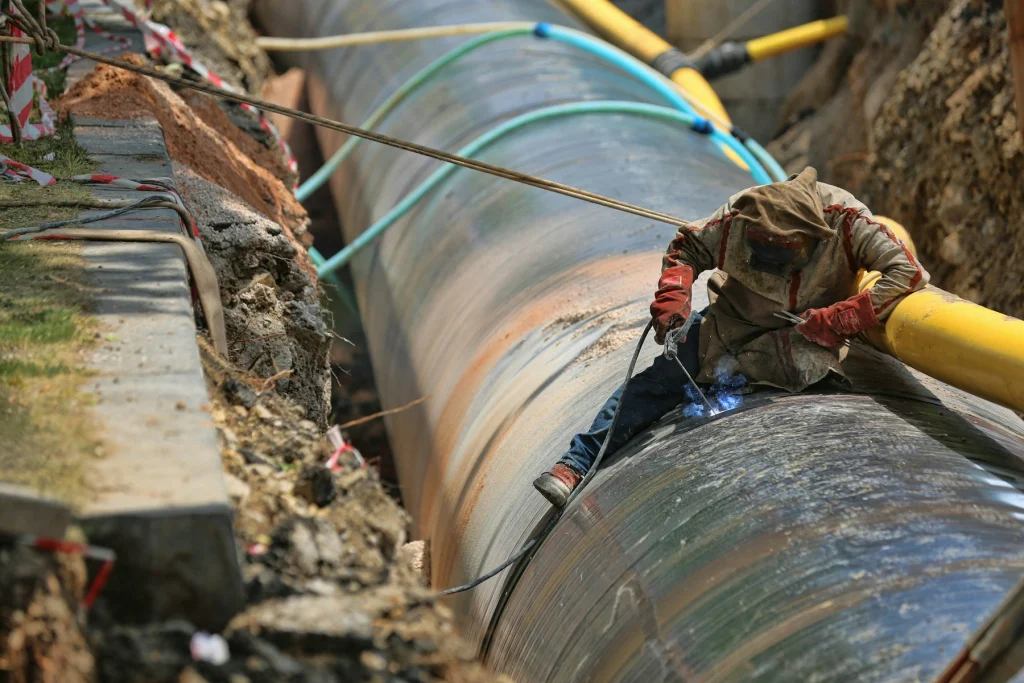
Outside of shutdowns, our plant maintenance welding crews handle the steady stream of repairs that keep a facility running, from worn conveyor structure to cracked supports and corroded grating.
Start with the quote form. Drawings, specifications, photos, measurements or a short description are enough to begin. For field work we may ask for a site walk, especially when access, isolation or existing conditions will drive the price.
You receive an itemized written quote that separates materials, shop hours, field hours, testing and any third-party services, along with assumptions and a proposed schedule. Changes are documented in writing before the work changes, not after. You can review our full list of industrial welding services, see the regions where we take on work, or read practical guidance on the Industrial Welding blog.
The governing code, the drawing and the owner's standard decide how a weld is made. We confirm them before pricing and follow them on every pass.
Prefabrication, kitted materials and an agreed sequence keep crews installing during the window instead of improvising inside it.
Permits, isolation, fire watch and fume control are scheduled tasks with time allotted, not steps squeezed in when convenient.
If a job needs a stamped vessel shop, an engineer or a different approach, we tell you at the quote stage rather than after mobilization.
We are a heavy industrial welding and fabrication contractor. Our work covers structural steel, process and utility pipe, plant maintenance and shutdown welding, heavy equipment rebuilds, production fabrication to drawing, and non-code repairs on tanks, hoppers and vessels. Customers are mostly operating facilities, contractors and fabricators that need code-aware work done safely and on schedule.
Both. Fabrication that can be done ahead of time is built in the shop, where fit-up, positioning and inspection are easier to control. Field crews handle installation, tie-ins, maintenance and repairs on site. Most plant projects use a mix, with shop prefabrication used to shorten the time a unit has to be down.
We build to the code and specification named in your contract, most often AWS D1.1 for structural steel and ASME B31.3 for process piping, with procedures and welder qualifications appropriate to that code. Tell us the governing documents and required records when you request a quote, and the quote will state exactly what we will supply.
No. Repairs and alterations to code-stamped pressure vessels require an organization holding the appropriate National Board authorization. Our tank and vessel work is non-code: hoppers, bins, atmospheric equipment, brackets, supports, ladders, platforms and similar items. If your equipment needs code work, we will tell you up front so you can engage the right shop.
Send whatever you have: drawings or sketches, the specification or governing code, material grades, photos of the existing condition, measurements, the site location and your target window. For shutdown work, include the outage dates and any site access requirements. The more detail we start with, the tighter and more accurate the written quote will be.
Send drawings, specifications, photos or a short scope through the quote form. We reply with questions or an itemized written quote.
Structural, pipe and plant welding for Texas industry.
Free written quote · No obligation · Reply within one business day
Industrial Welding
Tell us what you need built or repaired. We'll reply with a clear written quote.