Quick answer
Freeport industrial welding serves the Brazosport area of southern Brazoria County, home to one of the largest integrated chemical complexes in the world, Port Freeport and an LNG export terminal on Quintana Island. We take on plant maintenance, stainless and alloy process piping, structural steel and non-code repairs there, planned for corrosive service, humidity and hurricane exposure.
Maintenance and outage welding for chemical plants across the Brazosport area
Stainless and alloy piping for corrosive chemical service
Dock, rack and terminal steel at Port Freeport and Quintana
Low-hydrogen and coating practices for constant Gulf humidity
Pre-season and post-storm work planned around hurricane season
What Freeport industrial welding looks like in the Brazosport complex
The communities of Freeport, Lake Jackson, Clute, Oyster Creek and Jones Creek surround a vast industrial zone near the mouth of the Brazos River. Chemical plants here produce basic chemicals, plastics and intermediates on sites that stretch for miles, with additional refining and petrochemical capacity inland near Sweeny and Old Ocean.
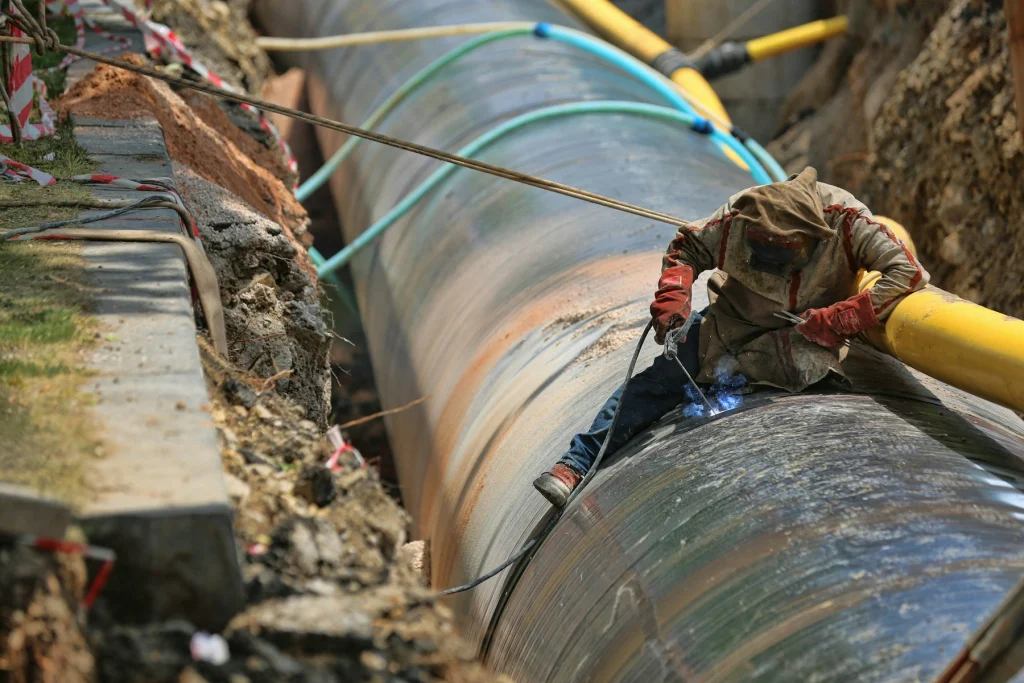
Freeport industrial welding is dominated by work inside operating chemical units. That means process piping repairs and modifications, pipe supports and racks, platforms and access steel, equipment supports and a long list of small maintenance jobs, all performed under the owner's permit system, safe work practices and documentation requirements.
Because these sites are so large, logistics matter. Travel inside the fence, gate processing, staging areas and permit timing can take as much of the day as the welding. A realistic schedule accounts for that from the start.
Corrosive service: chlorine, caustic and the alloys that handle them
Chemical production brings service conditions that ordinary carbon steel cannot handle. Chlorine and caustic, acids, solvents and high-temperature streams call for stainless steels, nickel alloys and other corrosion-resistant materials, and each one has its own welding requirements.
Stainless and nickel alloy welding typically depends on clean preparation, matching or overmatching filler metals, inert gas back purging, careful heat input and interpass temperature control, and post-weld cleaning to restore corrosion resistance. Carbon steel in caustic service may require post-weld heat treatment to reduce the risk of caustic stress corrosion cracking. The owner's materials specification sets those requirements, and we confirm them before pricing.
Material traceability is part of the job. Alloy fittings, pipe and filler metals are verified and recorded, and many owners require positive material identification before installation. Our industrial pipe welding service explains how we handle procedures, records and examination for alloy systems.
Inert gas back purging on stainless and nickel alloy roots
Heat input and interpass temperature limits
Post-weld cleaning and passivation where specified
Material verification and traceable records
Port Freeport, Quintana and marine terminal work
Port Freeport is a deepwater port handling containers, vehicles, project cargo, bulk and liquid products, and channel improvements have aimed to accommodate larger vessels. Nearby, the LNG export terminal on Quintana Island and the chemical docks along the channel add marine loading facilities with their own piping and structural needs.
Typical waterfront work includes pipe racks and supports to the docks, loading platform and walkway steel, handrail and gangway repairs, equipment supports and non-code repairs to sumps and containment. Marine exposure is severe, so detailing for drainage and coating repair around welds are part of every scope. Our industrial structural steel page covers fabrication and installation.
Waterfront facilities usually fall under the Maritime Transportation Security Act and require TWIC for unescorted access. Credentialing and escort requirements belong in the schedule before the crew arrives.
Industrial Welding services in Freeport, TX
Pipe racks, platforms, dock walkways and equipment supports for Brazosport plants and Port Freeport terminals, detailed for drainage and coated for marine exposure.
Stainless, nickel alloy, chrome-moly and carbon steel process piping to ASME B31.3 and the owner's specifications, with purging, traceability and examination built in.
Routine, breakdown and short-outage welding inside chemical units across Freeport, Lake Jackson, Clute and Oyster Creek, working under your permit system.
Structural and wear repairs to port handling equipment, material handling machinery and construction fleets supporting plant and terminal operations.
Batches of standard pipe supports, shoes, guides and platform parts built to drawing so maintenance teams have them on hand before outages.
Non-code repairs to sumps, containment, hoppers and external tank structure, with clear guidance on where API 653 or stamped repairs are required.
How should Freeport plants plan around hurricane season?
Hurricane season runs from June through November, and the Brazosport area sits on low coastal ground directly exposed to Gulf storms. Plants typically finish outdoor projects, secure temporary structures and inspect tie-downs and anchors before the peak of the season.
For welding scopes, that means scheduling non-urgent outdoor work outside the riskiest weeks where possible, keeping prefabricated items under cover until installation, and agreeing in advance what happens to an open scope if a storm forces the site to secure.
After a storm, repairs shift to damaged structure, displaced piping and supports, flooded equipment stands and dock steel. We take on recovery work as crew capacity allows and will be honest about timing when the whole coast needs help at once.
Working behind the levee: humidity, flooding and low ground
Much of the Freeport area sits behind a hurricane flood protection levee system, and the surrounding land is flat and close to sea level. Heavy rain can leave sites wet for days, and humidity stays high for most of the year.
Moisture control is a daily discipline. Low-hydrogen electrodes come from sealed containers or heated ovens, exposure times are tracked, flux-cored wires are stored dry and joints are dried or preheated where the procedure requires. Early-morning condensation on steel is common, so coating work around welds is timed to stay above the dew point.
Corrosion under insulation is a common finding on coastal piping. Damaged jacketing lets water in, and corroded supports, shoes and pipe sections show up when insulation comes off for inspection. Replacement supports should be detailed so they do not trap water the same way.
Small-bore, utility and tie-in work during short outages
Not every job is a major turnaround. Chemical plants run constant short outages, equipment swaps and unit modifications that need a few tie-ins, a section of corroded utility piping or new supports installed in a tight window.
These jobs reward preparation. Field measurements taken before the outage, spools built and examined in the shop, and materials kitted by line number let the crew install and test quickly. Our plant maintenance welding crews work this way on recurring lists, and production fabrication can build standard supports, shoes and guides in batches so they are on hand before they are needed.
Utility systems such as steam, condensate, cooling water, nitrogen and instrument air often get less attention than process lines until they fail. We repair and replace them to the owner's specification and arrange testing as required.
Getting a Brazoria County project quoted
We do not claim a Freeport or Lake Jackson shop address. Projects in the Brazosport area are staffed with shop fabrication shipped to site, traveling field crews or both, and the written quote shows how your job will be handled and how travel is covered.
A complete request includes the plant and unit, scope with drawings or photos, governing code and materials specification, examination and heat treatment requirements, target window and site access requirements such as safety council orientation, drug testing and TWIC. Owners with sites up the coast can compare our Houston and Beaumont pages, or read how we plan around downtime.
Neighborhoods and nearby areas around Freeport
Lake Jackson
Clute
Oyster Creek
Jones Creek
Quintana
Surfside Beach
Richwood
Angleton
Brazoria
Sweeny
Old Ocean
West Columbia
Danbury
Alvin
Manvel
Frequently asked questions
Do you take on industrial welding in the Freeport area?
Yes. As a Texas industrial welding contractor, we take on maintenance, process piping, structural steel, equipment and non-code tank work for chemical plants and terminals across Freeport, Lake Jackson, Clute and southern Brazoria County. We do not claim a local shop address. Projects are staffed with shop fabrication, field crews or both.
Can you weld stainless and nickel alloy piping for chemical service?
Yes, to the owner's materials specification. Alloy piping typically requires clean preparation, correct filler metal, inert gas back purging, heat input and interpass control, and post-weld cleaning. We confirm procedures, examination and material verification requirements with your engineering group and keep traceable records for every weld.
What is caustic cracking and how does welding affect it?
Caustic stress corrosion cracking can occur in carbon steel exposed to caustic solutions at elevated temperatures, and residual stress from welding increases the risk. Owner specifications often require post-weld heat treatment for carbon steel in caustic service above certain temperatures. Your materials engineer sets the limits, and we follow them.
Do your crews work at Port Freeport and Quintana terminals?
We take on piping, dock steel, walkways, supports and non-code repairs at waterfront facilities under the owner's permit and safety programs. Terminals usually require TWIC for unescorted access and site-specific orientation, so include those requirements in your quote request and we will assign credentialed crew members or plan for escorts.
How does Gulf humidity affect welding quality?
Humidity puts moisture into low-hydrogen electrodes and flux, which can cause hydrogen cracking in carbon steel. We store consumables in sealed containers or heated ovens, track exposure time, dry and preheat joints where required and time coating work to stay above the dew point, which matters during humid coastal mornings.
Can you help prepare for hurricane season or repair storm damage?
Yes, as crew capacity allows. Before the season, we take on tie-down repairs, reinforcement of temporary structures and outstanding outdoor scopes. After a storm, we repair damaged structure, supports and piping. Demand rises sharply along the coast after a major storm, so planning ahead with us helps.