Quick answer
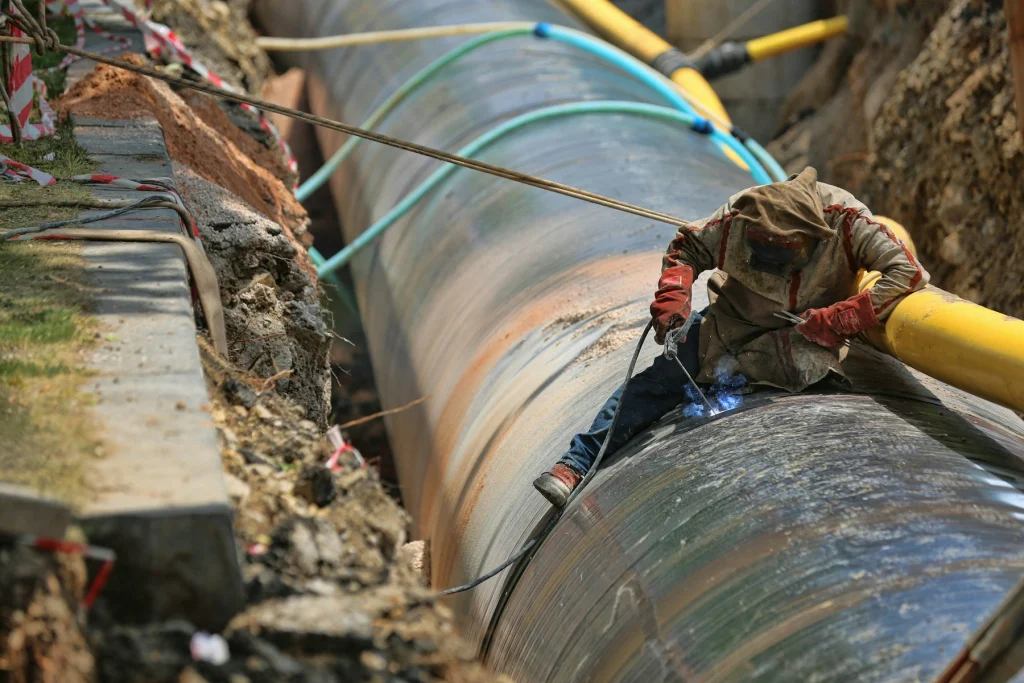
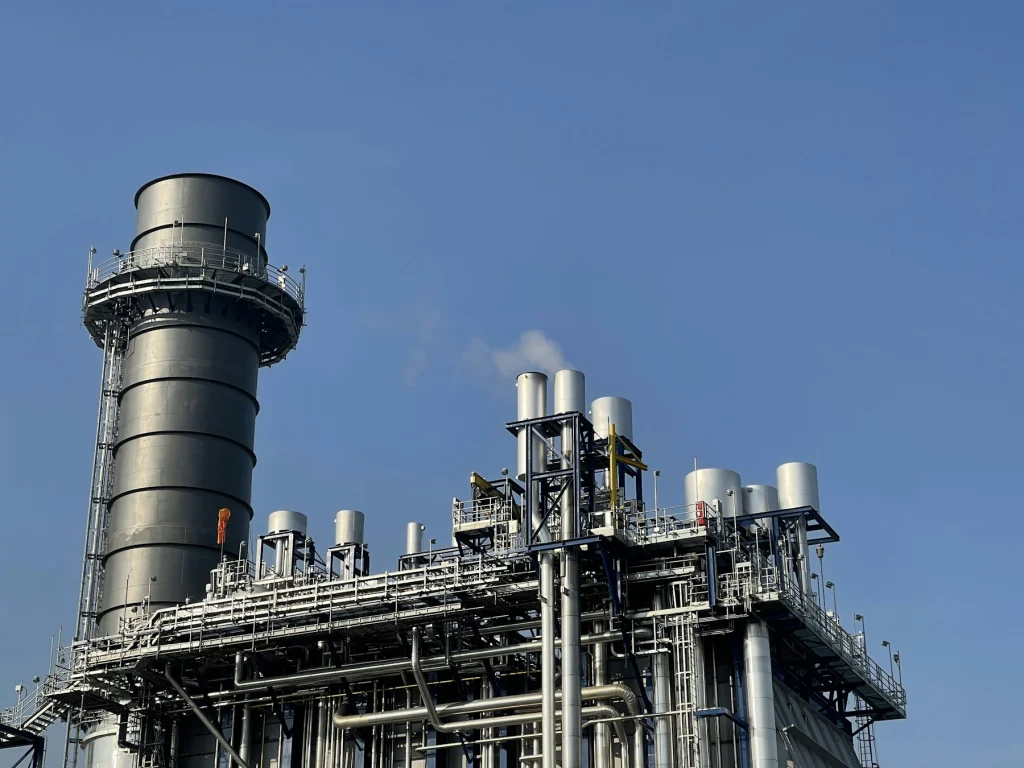
Plant maintenance welding keeps operating facilities running through routine repairs, emergency breakdown work and planned shutdowns or turnarounds. Our crews work under your permit and lockout programs, prefabricate repair parts before the outage, follow hot work and confined space rules, and document each repair so your reliability team knows exactly what was done and why.
Key points
Routine repair support, breakdown response and planned turnaround scopes
Crews that work under your hot work, lockout and confined space programs
Prefabrication and kitting before the outage to protect the restart date
Repair records that support your reliability and inspection history
Coordination with your planner, operations and other contractors
Three kinds of plant maintenance welding
Routine maintenance is the steady list of work orders: worn chute liners, cracked conveyor stringers, corroded grating, broken handrail, bent guards and leaking utility lines. It rewards a crew that knows the facility, moves efficiently between jobs and keeps paperwork current.
Breakdown work starts with a call that something has stopped production. Speed matters, but so does diagnosis. Welding a crack in a drive base without asking why it cracked usually buys a few weeks before the same failure returns.
Shutdowns and turnarounds are planned outages where a large volume of work happens in a fixed window. Success depends almost entirely on what happens before the unit comes down: scope definition, prefabrication, material staging, permits and an agreed sequence.
How should a shutdown welding scope be planned?
Good turnaround welding starts months out with a scope that is defined well enough to price. Each work package should identify the equipment, the expected repair, the materials and the inspection hold points. Where the scope depends on what inspectors find when equipment is opened, we agree in advance on how discovered work will be authorized and priced.
Next comes prefabrication. Replacement chute sections, liner plates, spools, platform modules and brackets are built in the shop from field measurements taken during a pre-outage walk. Materials, consumables, rigging and access equipment are staged so the crew starts welding on the first shift instead of waiting on deliveries.
During the outage we plan by shift, track progress against the critical path and flag problems early. Daily coordination with your planner keeps welding sequenced with scaffold, insulation, electrical and inspection crews, which is where many turnarounds actually lose time.
Work packages with equipment, repair method and materials
Field measurements taken before the outage begins
Prefabricated parts tagged by work package and location
Pre-agreed process for discovered work and change orders
Shift-by-shift plan aligned with other trades
Hot work in an operating facility
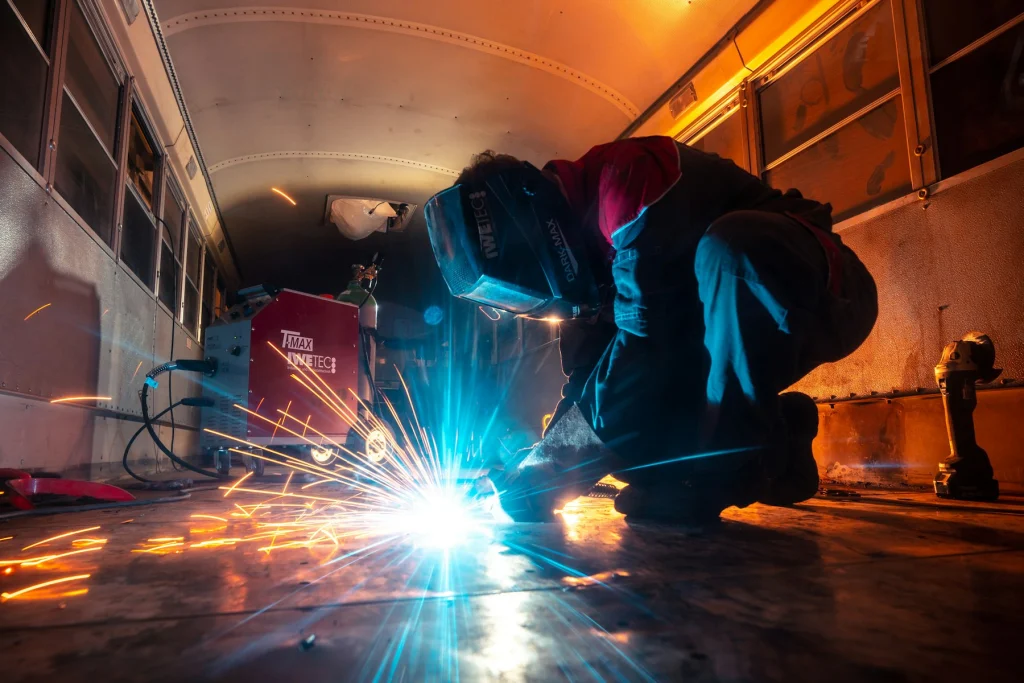
Welding, cutting and grinding are ignition sources, and plants contain fuels, dust and vapors. Hot work is controlled through the site permit system, which typically requires gas testing, removal or protection of combustibles, spark containment and a trained fire watch. OSHA's general industry welding rules under 29 CFR 1910 Subpart Q set baseline requirements, and NFPA 51B and many owner programs add more.
A fire watch stays in place during hot work and for a period after it ends; OSHA sets a minimum and many sites require longer. In dusty operations such as grain, food, wood and coal handling, cleaning accumulated dust before hot work is one of the most important steps, because dust that settles on beams and ledges can ignite well away from the arc.
We plan these controls into the schedule. A permit that takes an hour to issue and a fire watch that runs after the last weld are real time, and pretending otherwise produces schedules that cannot be met.
Isolation, confined spaces and work at height
Most plant maintenance welding happens on equipment that stores energy: electrical drives, pressurized lines, hydraulic systems, rotating machinery and elevated loads. Lockout and tagout under the site program, aligned with OSHA 29 CFR 1910.147, comes before any work, and our crew verifies isolation rather than relying on a tag alone.
Bins, hoppers, ducts and vessels are frequently permit-required confined spaces. Entry needs atmospheric testing, ventilation, an attendant and a rescue plan. Welding inside a confined space adds fume and oxygen displacement hazards, so ventilation and continuous monitoring are part of the job plan.
Elevated work needs scaffold built and tagged by a competent person, or aerial lifts with operators trained on them. We identify access needs during the pre-outage walk so scaffold requests reach your scaffold contractor in time.
Common plant repairs our crews handle
Across refineries, chemical plants, food processors, cement plants, mills and distribution centers, the same categories of repair come up repeatedly. Many are small individually but add up to a significant reliability burden when deferred.
Chutes, hoppers and transfer points: liner replacement, wear plate and hole repair
Conveyors: stringers, idler frames, head and tail pulley bases and take-up frames
Grating, handrail, toe plate, stair treads and ladder repairs
Ductwork, dust collector housings and fan bases
Pump and motor bases, skids and baseplate cracks
Utility piping, pipe supports and corroded hangers
Equipment guards and access doors
When to repair and when to replace a component
A repair makes sense when the damage is local, the parent metal is sound and the cause is understood. A replacement makes sense when wall loss is widespread, cracks keep returning from the same detail or the original design was undersized for current production.
Ultrasonic thickness readings, crack mapping and a look at repair history usually settle the question. If a component has been welded several times in the same place, the heat-affected material and accumulated residual stress make each new repair less reliable. In those cases a redesigned replacement, sometimes with a better detail or a heavier section, is the more economical choice over a year of operation.
How a plant maintenance job works with Industrial Welding
01
Walk and scope
We walk the equipment with your planner, take measurements and photos, and define each work package with materials and hold points.
02
Prefabricate and stage
Replacement parts are built and tagged in the shop, consumables and rigging are staged, and permits and access are arranged in advance.
03
Execute by shift
Crews work under your permits, track progress against the plan and raise discovered work immediately through the agreed approval process.
04
Close out and report
Areas are cleaned and released, repairs are documented with photos and notes, and repeat failures are flagged for follow-up.
Keeping maintenance welding records useful
Each repair should leave a record: what failed, what was found, the repair method, materials and filler used, and any follow-up recommended. Over time those records reveal patterns, such as a transfer chute that wears through every quarter or a support that cracks after each seasonal temperature swing.
We provide repair notes and photos with each work order and flag repeat failures for your reliability team. When the pattern points to a design issue, we can propose a modified part through our production fabrication service so spares are built consistently.
What should be ready before a plant maintenance welding crew arrives?
A short checklist saves hours on the first day. Have the permit authority and isolation points identified, site orientation scheduled, scaffold or lift access arranged and a laydown area set aside for materials and welding machines. Confirm where power, compressed air and water are available, and who signs off completed work.
Maintenance scopes often overlap other services. Structural replacements fall under industrial structural steel, line repairs under industrial pipe welding, and mobile equipment under heavy equipment rebuild. We combine them into one plan when they share an outage.
Frequently asked questions
Do you provide plant maintenance welding on an ongoing basis?
Yes. Some customers use us for scheduled maintenance days, others for a backlog of work orders, and others only for shutdowns. Recurring arrangements work best with a single point of contact on your side, an agreed process for issuing work, and regular review of completed repairs. Tell us your expected volume and frequency in the quote request.
Can you supply welders for a turnaround?
We take on defined turnaround welding scopes with our own supervision, rather than supplying individual welders by the hour without oversight. That arrangement keeps responsibility for quality and safety with one crew. Send the work list, outage dates and site requirements early, since turnaround seasons fill crew calendars quickly.
How do you handle hot work permits?
We work under your site's permit system. Before each job, the permit issuer and our crew review gas testing, combustible removal, spark containment and fire watch requirements. Our crew provides containment materials, extinguishers and trained fire watch personnel as agreed, and stays for the required period after hot work ends.
What happens if more damage is found during an outage?
We stop, document the finding with photos and measurements, and bring it to your planner with a recommended repair, time and material estimate. Work proceeds only after approval through the process agreed before the outage. Pre-agreed unit rates or time-and-material terms for discovered work keep these decisions fast.
Can you weld inside bins, hoppers and other confined spaces?
Yes, under your confined space program. Entry requires atmospheric testing, ventilation, an attendant and a rescue plan. Welding inside adds fume and oxygen displacement concerns, so we plan local exhaust and continuous monitoring. Allow time for these controls when scheduling confined space repairs within an outage.
Do you work nights and weekends?
When production schedules require it, yes. Off-shift work protects production but carries premium labor and sometimes reduced support from site staff, such as permit issuers and operators. We plan off-shift work with your team so permits, isolations and approvals are in place before the crew arrives.