Quick answer
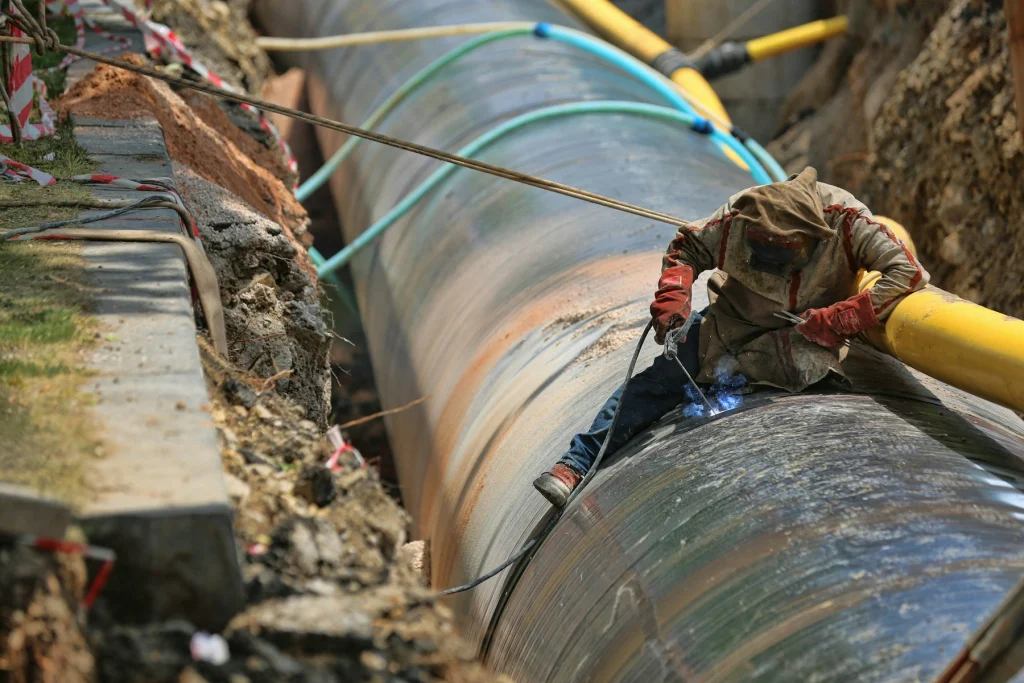
Houston industrial welding centers on the refineries, chemical plants, terminals and pipelines along the Houston Ship Channel and the Gulf Coast. As a Texas industrial contractor, we take on turnaround and maintenance welding, B31.3 process piping, structural steel and equipment repair there, with strict low-hydrogen practices for humidity and coatings planned for salt air.
Turnaround and maintenance welding for refineries, chemical plants and terminals
Process piping to ASME B31.3 and owner specifications
Low-hydrogen discipline suited to Gulf Coast humidity
Site access requirements such as safety council orientation and TWIC planned in advance
Storm preparation and post-storm repair support where crew capacity allows
Why the Ship Channel shapes Houston industrial welding
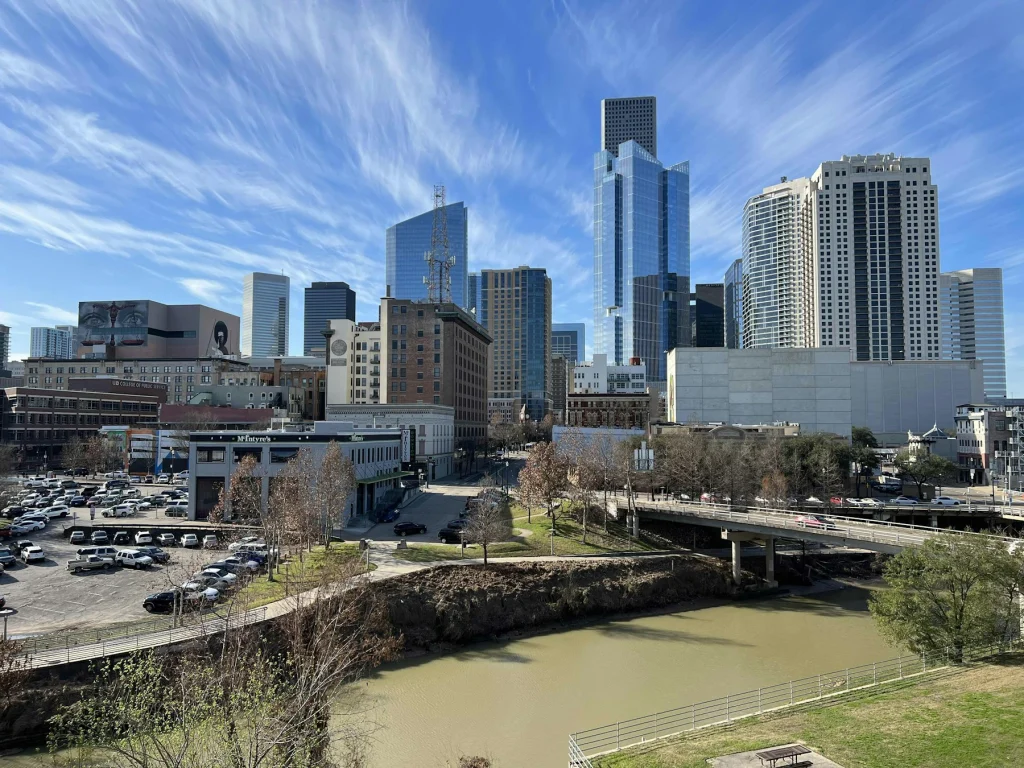
The Houston Ship Channel runs from the Port of Houston turning basin past Galena Park, Pasadena, Deer Park, Channelview, La Porte and Baytown to Galveston Bay, and it is lined with refineries, chemical plants, bulk liquid terminals and the container terminals at Barbours Cut and Bayport. Further down the coast, Texas City and Freeport add more refining and chemical capacity, and to the east the Beaumont and Port Arthur refining district extends the same kind of work toward Louisiana.
That concentration of process industry defines welding demand. Most work is process and utility piping, pipe racks and supports, platforms and access steel, exchanger and equipment supports, and the endless maintenance list of a facility that operates around the clock.
Inland, the energy equipment manufacturers and fabricators across north and northwest Houston build skids, frames and process modules that ship around the world, which adds steady demand for production fabrication to drawing.
Turnaround season on the Gulf Coast
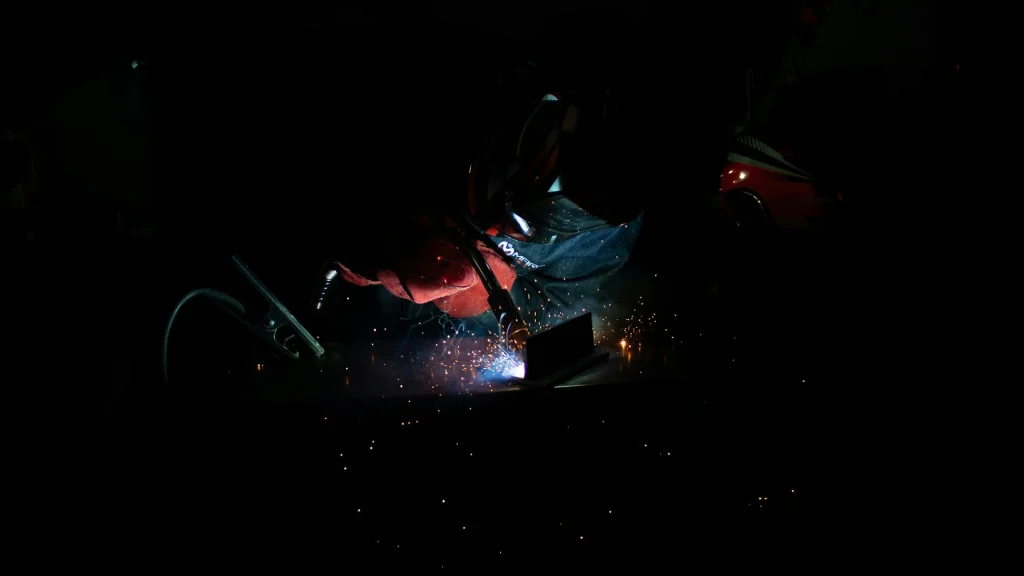
Gulf Coast turnarounds tend to cluster in spring and fall, when cooler weather and lower seasonal demand make it easier to take units down. During those windows, qualified welders and supervisors are in short supply, and contractors who were not booked early struggle to staff.
Successful turnaround welding starts with a frozen scope, prefabricated spools and supports, kitted materials and a clear process for discovered work. Our plant maintenance welding crews work under your permit system, coordinate with scaffold, insulation and inspection contractors, and track progress against the critical path shift by shift.
If your turnaround is in the coming season, send the work list and dates as early as possible. Early booking secures crew and gives time to fabricate everything that does not need to be welded in place.
Work packages with line numbers, materials and examination requirements
Pre-outage field measurements for every tie-in
Spools and supports fabricated, examined and tagged before the outage
Agreed rates and approval path for discovered work
What does Gulf humidity do to low-hydrogen welding?
Low-hydrogen electrodes such as E7018 absorb moisture from the air, and moisture in the coating puts hydrogen into the weld. Hydrogen is a leading cause of delayed cracking in carbon steel and higher-strength steels, and the cracks may not appear until hours after welding.
In Houston humidity, electrodes have to come from sealed containers or holding ovens and be returned before their allowable exposure time runs out. Electrodes that have been exposed too long are reconditioned according to the manufacturer and code requirements, or discarded. Flux-cored wires and submerged arc fluxes need similar care. On thick sections and higher-strength steels, preheat also helps drive off surface moisture and slows cooling so hydrogen can diffuse out before it causes damage.
Humidity also affects coatings and surface preparation. Condensation forms when steel temperature is near the dew point, which is common in the early morning on the coast, so coating work around welds is timed and checked against ambient conditions.
Industrial Welding services in Houston, TX
Pipe racks, platforms, exchanger supports and access steel for Ship Channel plants and terminals, with coatings selected for salt air and humidity.
Carbon, stainless and chrome-moly process piping to ASME B31.3, plus utility lines and corroded support replacement. Spools are built ahead of turnarounds to shorten tie-in windows.
Routine, breakdown and turnaround welding for refineries, chemical plants and terminals from Baytown to Texas City, working under your permit and safety programs.
Repairs to port handling equipment, scrap and recycling machinery, and construction fleets, with preheat and filler selection suited to the steel.
Skids, frames and repeat weldments for Houston energy equipment builders and integrators, built to drawing with first-article approval.
Non-code repairs on hoppers, process tanks and external tank structure at terminals and plants, with clear guidance on API 653 and code-stamped work.
Salt air and corrosion under insulation
Coastal air carries chlorides that attack bare steel and degrade coatings. On insulated piping and vessels, the bigger problem is corrosion under insulation: water gets past damaged jacketing, stays trapped against the steel and corrodes it out of sight. Damage is often found only when insulation is removed for inspection.
Repairs range from local pipe section replacement to new supports where the old ones have corroded at the contact point. Pipe shoes, wear pads and support clamps are common failure points. When we replace supports, we look at drainage and contact details so the new steel does not trap water the same way. See our industrial pipe welding page for how we handle section replacement and testing.
Terminals, midstream and the Mont Belvieu storage hub
East of Houston, Mont Belvieu is a major hub for natural gas liquids fractionation and underground storage, and the region's terminals move crude, refined products and chemicals by ship, barge, rail and pipeline. Terminal and midstream facilities need pipe and pipe support work, loading rack structures, platforms, dock steel and non-code tank and equipment repairs.
Facilities regulated under the Maritime Transportation Security Act require a Transportation Worker Identification Credential (TWIC) for unescorted access. Plan badging and escort requirements early, because they can delay a crew far more than the welding itself. For non-code tank and hopper work at terminals, see tank repair welding, which explains where API 653 and code requirements apply.
Hurricane preparation and storm recovery
Hurricane season runs from June through November. Before a storm, facilities secure loose equipment, reinforce temporary structures and check that tie-downs and anchors are sound. After a storm, the work shifts to damaged structure, pipe supports, signage, canopies and equipment that was moved or flooded.
Post-storm demand rises quickly across the region. If you want help with preparation or recovery, plan ahead and tell us your priorities. We take on storm work as crew capacity allows and will be honest about timing rather than promising response times we cannot meet.
What should a Houston plant send with a quote request?
A focused quote request saves a round of questions: the site and unit, the scope with drawings or photos, the governing code and piping class, material grades, examination and testing requirements, your target window, and site access requirements such as safety council orientation, drug testing and TWIC.
As a Texas contractor, Houston is close to home for us, but we still do not claim a Houston shop address. Work is staffed through our shop and field crews. Compare the inland picture on our Dallas service area page, or read how we plan around downtime.
Neighborhoods and nearby areas around Houston
Pasadena
Deer Park
La Porte
Baytown
Channelview
Galena Park
Jacinto City
Texas City
Mont Belvieu
Manchester
Pearland
Clear Lake
Humble
Katy
Cypress
Spring Branch
Frequently asked questions
Do you provide turnaround welding in Houston?
Yes. We take on defined turnaround welding scopes at refineries, chemical plants and terminals in the Houston area, with our own supervision. Spring and fall turnaround seasons fill crew calendars, so send the work list, outage dates and site access requirements as early as you can for the best chance of securing crew and prefabrication time.
How do you prevent hydrogen cracking in Houston humidity?
We store low-hydrogen electrodes in sealed containers or heated holding ovens, limit how long electrodes are exposed to the air, recondition or discard electrodes that exceed exposure limits, and apply preheat where the procedure requires it. Flux-cored wire and fluxes are stored with similar care, since humidity affects them too.
Do your crews have TWIC cards?
TWIC requirements depend on the facility. Sites regulated under the Maritime Transportation Security Act require TWIC for unescorted access, and many plants also require regional safety council orientation and drug testing. Tell us your site's requirements in the quote request so we assign credentialed crew members or plan for escorts.
Can you repair pipe supports damaged by corrosion under insulation?
Yes. Corroded shoes, clamps, wear pads and support steel are common finds when insulation is removed. We replace damaged supports, repair or replace affected pipe sections under your piping specification, and look at drainage and contact details so the new support does not trap moisture in the same way.
Do you do hurricane preparation or storm repair work?
We take on storm preparation and post-storm structural and equipment repairs as crew capacity allows. Demand rises sharply across the region after a major storm, so planning ahead helps. Tell us your priorities and site conditions, and we will be honest about what we can do and when.
Is Industrial Welding located in Houston?
We are a Texas industrial welding contractor and take on work throughout the Houston area, but we do not claim a Houston shop or office address. Projects are staffed with shop fabrication, field crews or both, and the written quote explains exactly how your job will be handled and how any travel costs are covered.