Quick answer
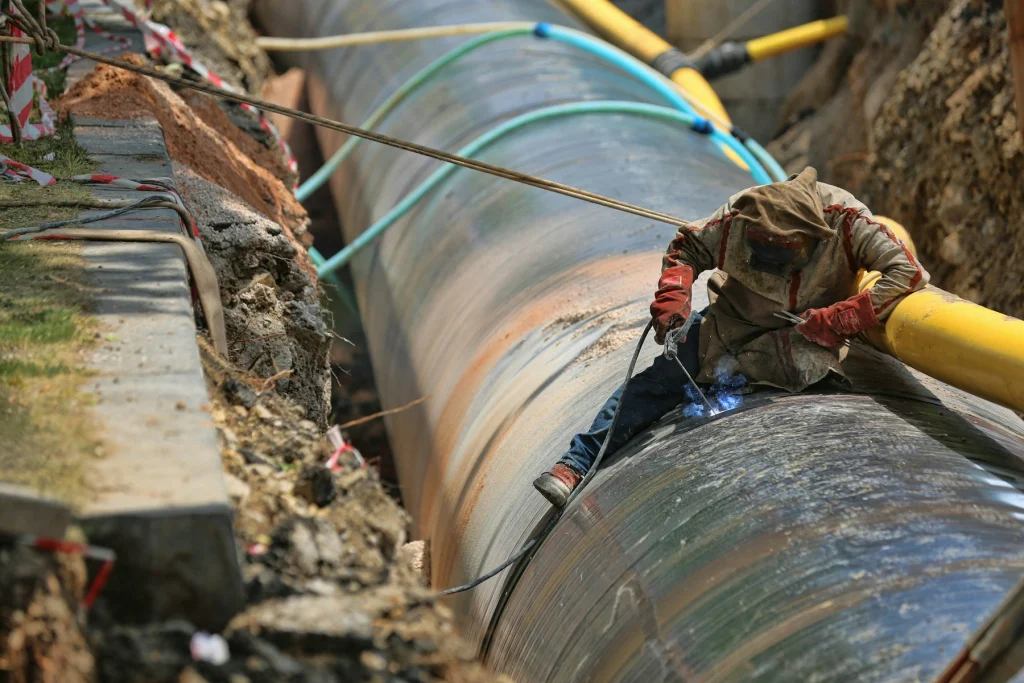
Corpus Christi industrial welding supports the refineries, chemical plants, crude and LNG export terminals and pipelines around the Port of Corpus Christi and the Coastal Bend. We take on process piping, dock and terminal steel, plant maintenance and non-code tank repairs there, choosing processes, materials and coatings that hold up to salt air and strong onshore wind.
Maintenance and turnaround welding for Inner Harbor refineries and chemical plants
Pipe, rack and dock steel for crude, product and LNG export terminals
Field processes chosen for steady coastal wind
Corrosion-aware details and coating repair for salt air exposure
Pipeline-related station and terminal piping for crude arriving from inland basins
Why port exports drive Corpus Christi industrial welding demand
The Port of Corpus Christi ranks among the largest ports in the United States by tonnage and has become a leading gateway for American crude oil exports. Pipelines carry crude and gas from the Permian Basin and the Eagle Ford Shale to terminals on the Inner Harbor, at Ingleside and along La Quinta Channel, where it is stored, blended and loaded onto tankers.
That flow keeps a steady stream of welding work moving: new tank farm piping and manifolds, pipe racks to the docks, loading platform steel, meter and pump station modifications, and maintenance on everything already in service. When terminals expand, construction and tie-ins happen around live operations, which makes planning and hot work control central to the job.
Corpus Christi industrial welding is therefore a mix of capital project support and ongoing maintenance. Our industrial pipe welding crews handle the piping side, and industrial structural steel covers racks, platforms and access steel.
Refinery Row and the Inner Harbor plants
Along the north side of the city, the Inner Harbor is lined with refineries, chemical plants and storage terminals that locals often call Refinery Row. These sites run around the clock and schedule maintenance and turnarounds much like the plants on the upper Texas coast.
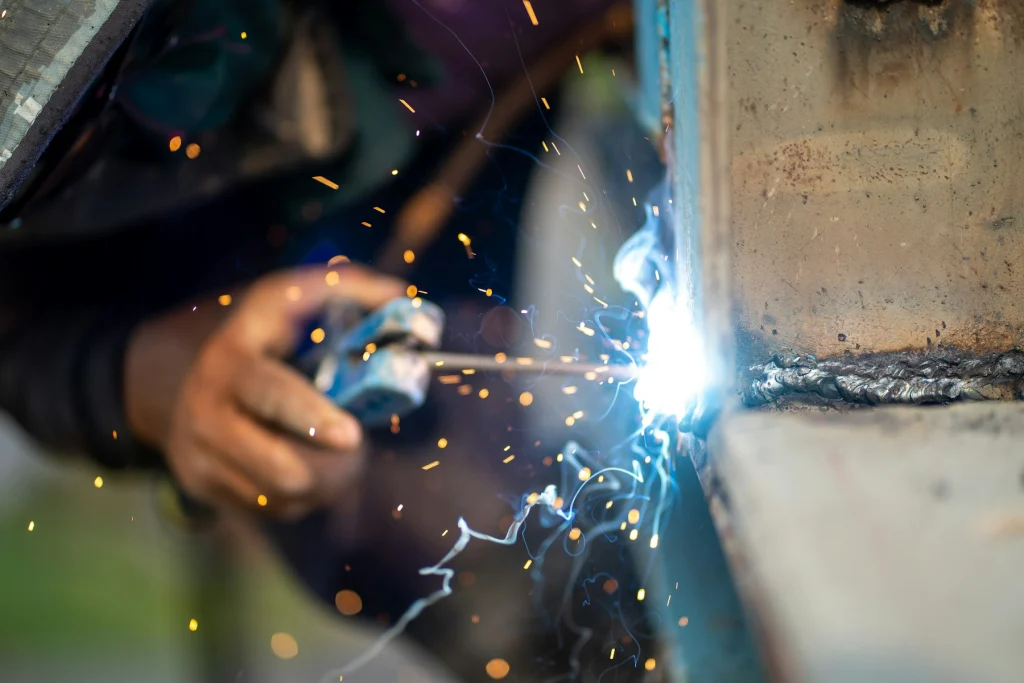
Typical work includes process and utility piping repairs, replacement of corroded supports, exchanger and equipment support steel, platform and ladder repairs found during inspection, and prefabricated spools for planned replacements. Our plant maintenance welding crews work under the site's permit system, with gas testing, fire watch and documentation done the way your safety program requires.
Refineries here face the same metallurgy questions as any Gulf Coast plant: chrome-moly lines that need preheat and post-weld heat treatment, stainless systems that need purging and heat input control, and owner specifications that set examination percentages and hardness limits. We confirm all of it before pricing.
How does salt air change weld repairs in the Coastal Bend?
Corpus Christi sits behind barrier islands on an open bay, and onshore breezes carry chloride-laden air across every plant and terminal. Bare carbon steel rusts quickly, coatings break down at edges and welds, and crevices such as lap joints, skip welds and back-to-back angles trap salt and moisture.
Good repairs start with details. We prefer seal-welded or fully closed connections where the design allows, avoid pockets that hold water, grind sharp edges so coatings can build proper thickness, and plan coating repair around every new weld. On galvanized steel, the damaged area around a weld needs a recognized zinc-rich repair method after welding, and galvanizing fumes require proper ventilation and respiratory protection.
Stainless steel is not immune. Austenitic grades such as 304 and 316 can suffer chloride stress corrosion cracking, especially under wet insulation at warm operating temperatures. When we replace stainless piping or supports in coastal service, we flag these conditions so your engineering team can decide on materials, coatings or insulation changes.
Seal welds and closed connections to eliminate crevices
Edge preparation so coatings build full thickness
Zinc-rich repair of galvanizing damaged by welding
Attention to chloride cracking risk on insulated stainless
Industrial Welding services in Corpus Christi, TX
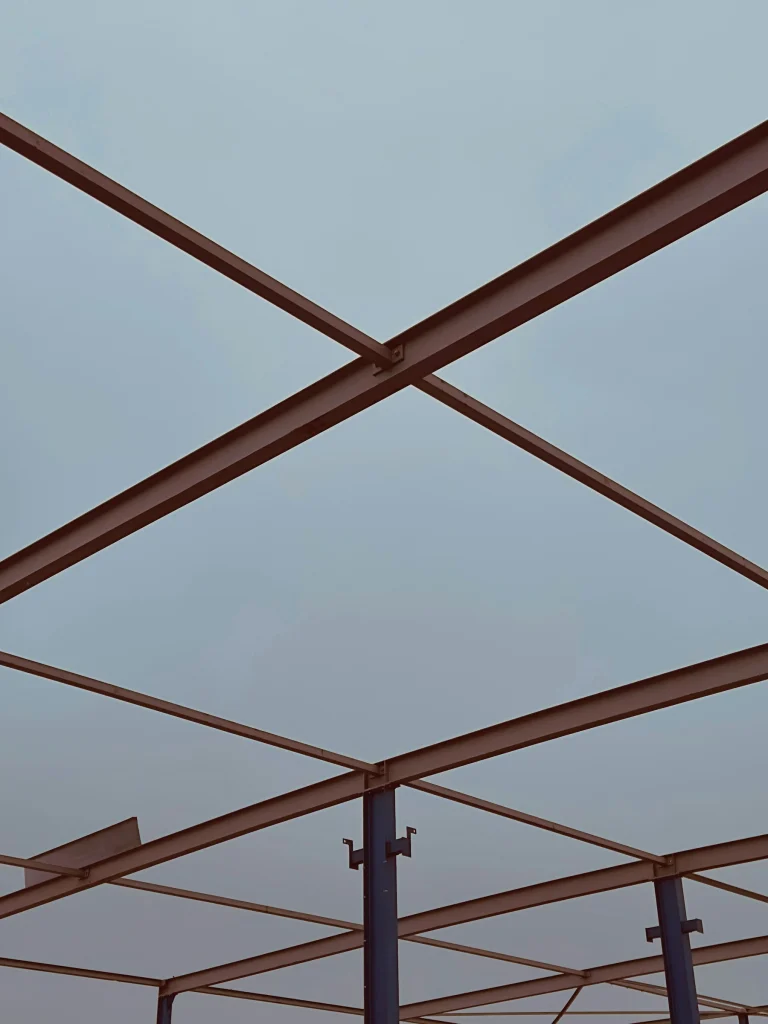
Pipe racks, dock platforms, walkways, equipment supports and access steel for Coastal Bend refineries and terminals, detailed to shed water and coated for salt air.
Process, transfer and utility piping to ASME B31.3 for Inner Harbor plants and export terminals, with wind-tolerant field processes and shop-built spools.
Routine, breakdown and turnaround welding for refineries, chemical plants and terminals around the Port of Corpus Christi, working under your permit system.
Structural repairs to port handling equipment, construction fleets and material handling machinery, with preheat and filler choices matched to the steel.
Repeat pipe supports, skid frames, platform components and brackets built to drawing for terminal expansions and plant maintenance stock.
Non-code repairs to sumps, containment steel, hoppers and external tank structure at terminals and plants, with guidance on API 653 and stamped work.
Wind, shielding gas and field process choice
The Coastal Bend is known for steady, strong winds, and wind is hard on gas-shielded welding. A breeze that would barely be noticed on a hot day can blow away the argon or CO2 shielding from MIG or TIG welding, leaving porosity in the weld.
In the field we often choose processes that carry their own shielding, such as shielded metal arc welding with low-hydrogen electrodes or self-shielded flux-cored wire, where the procedure and code allow. When gas-shielded processes are required, such as TIG root passes on stainless or alloy pipe, we build windscreens and enclosures around the joint.
Wind also affects preheat, which bleeds off faster from exposed steel, and fire watch, since sparks travel farther. Hot work permits on windy days typically call for wider spark containment and closer gas monitoring, and we plan for that rather than discovering it on the morning of the job.
Crude and LNG export terminals across the bay
Across the bay in San Patricio County, Ingleside and the La Quinta Channel area host large crude export terminals and an LNG export facility near Gregory, with more industrial development nearby. These sites combine big tank farms, long pipe racks, marine docks and heavy rotating equipment.
Terminal work commonly includes manifold and transfer piping, pump and meter skid connections, pipe support and rack modifications, dock walkways and platforms, and non-code repairs to sumps and secondary containment steel. Our tank repair welding page explains where our non-code scope stops and where API 653 tank work, handled under the owner's inspection program, takes over.
Waterfront facilities usually require TWIC for unescorted access, plus site orientation and drug testing. Tell us those requirements in the quote request so credentialing does not hold up the crew.
Pipelines arriving from the Eagle Ford and Permian
Many of the barrels exported through Corpus Christi travel hundreds of miles by pipeline before they arrive. Inland, the work happens on gathering systems, compressor stations and tank batteries in the oilfield, which we describe on our Midland service area page.
At the coast, the pipeline story ends at receipt stations, pig receivers, metering, tank farm connections and dock lines. Pipeline welding is commonly qualified to API 1104 and governed by ASME B31.4 for liquids or B31.8 for gas, while terminal and plant piping often falls under B31.3. Where a project crosses those boundaries, we confirm with the operator which code applies to each segment before work starts.
Hurricane exposure and planning a Coastal Bend project
The Coastal Bend sits directly in the path of Gulf hurricanes, and storms have caused serious damage in nearby coastal communities in recent years. Structures here are designed for high wind loads set by the engineer of record, so repairs and additions must follow the engineer's details rather than shortcuts.
Before hurricane season, facilities often schedule tie-down inspections, reinforcement of temporary structures and repairs to damaged supports. After a storm, we take on structural and equipment repairs as crew capacity allows and will be honest about timing.
We do not claim a Corpus Christi shop or office. Projects are staffed with shop fabrication, traveling crews or both, as the written quote explains. Owners with sites on both ends of the coast can compare our Houston work, and you can read how we plan around downtime.
Neighborhoods and nearby areas around Corpus Christi
Inner Harbor
Refinery Row
Ingleside
Gregory
Aransas Pass
Rockport
Port Aransas
Robstown
Calallen
Annaville
Tuloso-Midway
Flour Bluff
North Beach
Taft
Sinton
Kingsville
Frequently asked questions
Do you take on industrial welding in Corpus Christi?
Yes. As a Texas industrial welding contractor, we take on pipe, structural, maintenance, equipment and non-code tank work for refineries, chemical plants and terminals around Corpus Christi and the Coastal Bend. We do not claim a local shop address. Projects are staffed with shop fabrication, traveling field crews or both, as the written quote explains.
How do you weld outdoors in Corpus Christi wind?
Wind strips shielding gas from MIG and TIG welds, so in the field we often use stick welding with low-hydrogen electrodes or self-shielded flux-cored wire where the procedure allows. When gas-shielded welding is required, we build windscreens or enclosures. We also widen spark containment and watch preheat closely on windy days.
What can be done to make welded steel last longer in salt air?
Design and details matter as much as coating. Closing crevices with seal welds, avoiding pockets that hold water, grinding edges for proper coating build and repairing coatings immediately around new welds all extend life. On galvanized steel, welded areas need a recognized zinc-rich repair. Your engineer or coating specialist should set the coating system.
Do you work at crude and LNG export terminals?
Yes, within our scope. We take on piping, pipe supports, dock steel, platforms and non-code repairs at terminals, working under the owner's permit and safety programs. Waterfront sites usually require TWIC and site-specific orientation, so include those requirements with your quote request so the crew plan reflects them.
Which code applies to terminal and pipeline piping?
It depends on the segment. Pipeline welding is commonly qualified to API 1104 with ASME B31.4 governing liquid lines and B31.8 governing gas lines, while terminal and plant piping often falls under ASME B31.3. Boundaries are set by the operator and regulators, so we confirm the governing code for each segment before work starts.
Can you help with hurricane preparation or storm damage?
We take on pre-season reinforcement, tie-down repairs and post-storm structural and equipment repairs as crew capacity allows. Demand spikes across the coast after a major storm, so planning ahead helps. Repairs to engineered structures follow the engineer of record's details, especially where high design wind loads apply.