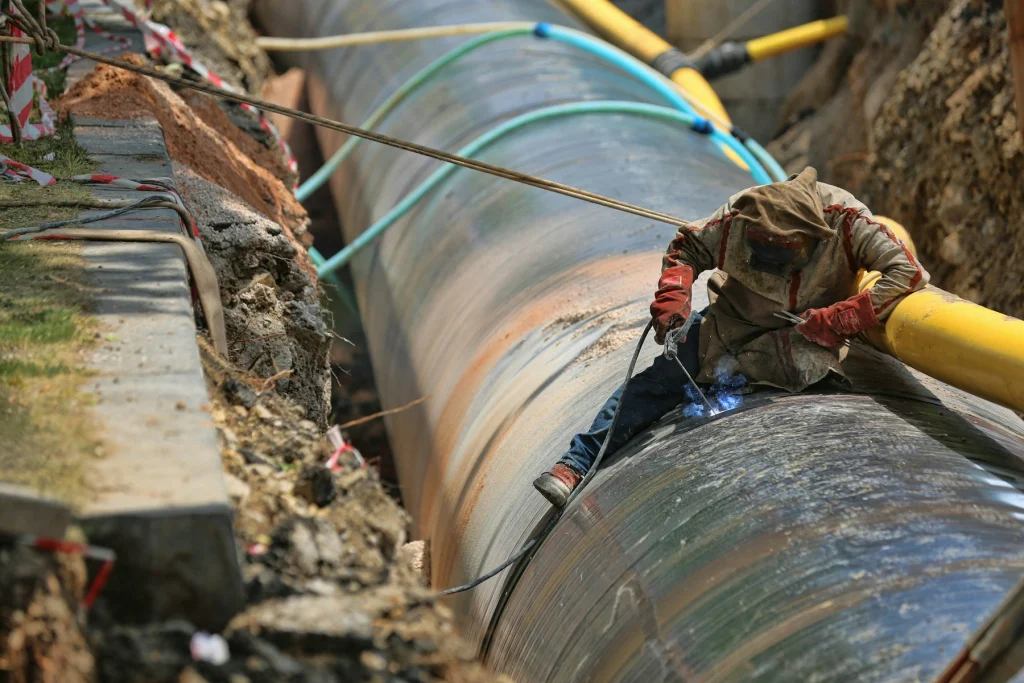
Hardfacing is the welding of a wear-resistant alloy onto a part’s surface so it outlasts the base metal, while wear plate is pre-hardened steel or overlay plate bolted or welded on as a replaceable liner. Choosing between them depends on the wear type (abrasion, impact or both), the base metal, part geometry and how much downtime a rebuild costs.
Every operation that moves rock, soil, ore, grain, scrap, coal or cement fights the same battle: material wears away steel. A bucket lip that loses half its thickness, a chute that wears through, a crusher hammer that rounds off — each means lost production, and eventually a replacement part that may carry a long lead time. Done well, hardfacing and wear liners can multiply service life. Done poorly, they spall, crack or wear away the parent metal they were meant to protect.
Key takeaways
- Identify the dominant wear mechanism first. Abrasion, impact, metal-to-metal contact, erosion and heat each call for different alloys.
- Know the base metal. Manganese steel, carbon steel, cast iron and quenched-and-tempered AR plate all weld differently.
- Chromium carbide overlays resist abrasion extremely well but tolerate little impact and should normally be limited in thickness.
- AR400 and AR500 plate make excellent replaceable liners, but overheating during welding softens them near the weld.
- Rebuild before wear reaches the base structure. Restoring a worn edge is far cheaper than repairing a cracked bucket shell.
What causes wear on heavy equipment?
Wear is not one thing. Correctly naming the mechanism is the most important step in selecting a hardfacing alloy or liner.
- Low-stress abrasion: sand, soil or grain sliding across a surface, as on chutes, hoppers, screw conveyors and tillage tools.
- High-stress or gouging abrasion: hard particles crushed against the surface under load, as on crusher rolls, bucket teeth and ripper tips.
- Impact: repeated pounding from large rocks or scrap, which can crack hard, brittle overlays.
- Metal-to-metal (adhesive) wear: sliding contact between parts such as rollers, idlers, pins and shafts.
- Erosion: particles carried in air or fluid striking a surface, common in pump casings, fan blades and pneumatic conveying elbows.
- Heat and corrosion: elevated temperature or chemical exposure that combines with abrasion, as in sinter plants, kilns and some processing lines.
Most parts see a combination. A bucket digging blasted rock sees gouging abrasion and heavy impact; the same bucket in sandy soil sees mostly low-stress abrasion. The right overlay for one is wrong for the other.
Common hardfacing alloy families
Consumable manufacturers offer dozens of products, but most fall into a handful of families. Exact hardness and properties vary by product, so always check the manufacturer’s data sheet.
Build-up alloys
Low-alloy deposits used to restore worn dimensions before a hard top layer goes on. They provide a tough, crack-resistant foundation and help avoid excessive layers of brittle hardfacing.
Martensitic alloys
Tool-steel type deposits with a good balance of impact resistance and moderate abrasion resistance. They are common on rollers, idlers, shovel parts and other components that see metal-to-metal wear plus some impact.
Austenitic manganese alloys
These deposits are relatively soft as welded but work-harden under impact. They are used to rebuild and join manganese steel parts such as crusher jaws, hammers and dipper teeth, and as a tough buffer layer in high-impact areas.
Chromium carbide alloys
High-chromium iron deposits containing hard carbides that resist abrasion very well. They usually form small relief-check cracks across the bead as they cool. These checks are normal stress relief and are generally considered acceptable, but they make chromium carbide less suitable for heavy impact.
Complex and tungsten carbide overlays
Alloys containing carbides of niobium, molybdenum, tungsten or vanadium target severe abrasion, sometimes at elevated temperature. Tungsten carbide particles in a tough matrix are used on drilling tools, mixer blades and other parts facing extreme abrasion, often applied by specialized processes.
How is hardfacing applied?
Hardfacing can be applied with several welding processes. Stick welding (SMAW) is flexible and portable, which makes it common for field repairs on a single bucket or blade. Flux-cored wire, particularly self-shielded open-arc wire, deposits metal much faster and is popular for larger surfaces in the shop or field. Submerged arc welding suits large cylindrical parts such as rolls and idlers. Plasma transferred arc, laser cladding and oxy-fuel methods are used for precise or specialty overlays.
Bead patterns matter
Hardfacing does not always need to cover the full surface. Consumable makers commonly recommend patterns based on the material being handled:
- Stringer beads spaced apart, oriented relative to the material flow depending on whether the material is coarse rock or fine soil.
- Waffle or crosshatch patterns that trap fine material, so packed soil or sand protects the surface.
- Dot patterns on thin or heat-sensitive sections where full coverage would distort the part or overheat it.
Pattern selection reduces heat input, consumable use and distortion while still protecting the wear zone. An experienced heavy equipment rebuild crew picks patterns from the actual wear marks on the part, not from habit.
Preventing cracking, spalling and base metal damage
Most hardfacing failures come from preparation and heat control, not from the alloy itself.
- Identify the base metal. Austenitic manganese steel is generally nonmagnetic, which is a quick field check. Manganese steel needs low heat input and controlled interpass temperature, commonly kept below a few hundred degrees Fahrenheit, to avoid embrittlement. High-carbon and alloy steels usually need preheat to avoid cracking.
- Remove old, fatigued hardfacing. Layering new overlay on top of cracked or spalled material invites failure. Air arc gouging or grinding back to sound metal is often required.
- Repair cracks in the base metal first. Dye penetrant or magnetic particle testing can reveal cracks before overlay hides them. Our guide to weld inspection methods explains how those tests work.
- Use a buffer layer when needed. Austenitic stainless or build-up alloys between the base metal and hard top layer help absorb stress and limit dilution.
- Respect layer limits. Chromium carbide overlays are often limited to a couple of layers, because thicker deposits are prone to spalling. Check the product data sheet.
Wear plate: AR steel and overlay plate
Instead of welding an alloy onto the part, many operations install wear plate as a replaceable liner. Two families dominate.
Abrasion-resistant (AR) steel plate
AR400 and AR500 are quenched-and-tempered plates with nominal Brinell hardness in the 400 and 500 range. They are tough, reasonably weldable with low-hydrogen processes and can be cut and formed within manufacturer limits. Typical uses include truck bed liners, chute and hopper liners, bucket wear strips, dozer blade cheek plates and conveyor transfer points.
Heat is the enemy of AR plate. Excessive preheat, high heat input or flame straightening can temper the steel and leave a soft band beside the weld. Follow the plate manufacturer’s preheat and interpass guidance for the thickness involved. Joining welds are commonly made with lower-strength, more ductile filler, since the weld is not meant to be the wear surface. AR plate is also not a structural grade; do not use it to carry structural loads unless an engineer has specifically approved it.
Chromium carbide overlay plate
Overlay plate consists of a mild steel backing with a chromium carbide layer welded on at the mill. It offers far higher abrasion resistance than AR plate for sliding wear, such as in coal chutes, cement plant liners and aggregate transfer points. It generally needs plasma or abrasive cutting rather than oxy-fuel, and it is attached by welding to the mild steel side, plug welding or countersunk fasteners. It tolerates heavy impact poorly, so it fits best where material slides rather than drops.
Hardfacing or wear plate: how to choose
Neither approach is universally better. Use these questions to guide the decision:
- Is the surface flat or simple? Liners fit flat and gently curved surfaces. Complex shapes such as teeth, tips and edges usually favor hardfacing.
- How fast does it wear? Fast-wearing areas benefit from bolt-in liners that can be swapped in a short maintenance window.
- How much impact is involved? Heavy impact favors AR plate, manganese or martensitic overlays over chromium carbide.
- Where does the work happen? Field hardfacing avoids hauling equipment to a shop; liners can be prefabricated, as with our production fabrication of repeat liner kits, and installed quickly on site.
- What does downtime cost? If the machine earns its keep every hour, prefabricated liner kits and scheduled rebuilds usually beat emergency repairs.
Where hardfacing and liners pay off
Wear protection shows up across nearly every heavy industry, but the details change with the material being handled.
- Construction and earthmoving: bucket lips, side cutters, heel shrouds, dozer end bits and ripper shanks, where soil type decides between chromium carbide and tougher martensitic overlays.
- Mining, quarries and aggregates: crusher hammers and jaws, screen decks, grizzly bars, feeder pans and haul truck bed liners facing both gouging abrasion and impact.
- Cement and power generation: chutes, fan blades, pulverizer components and ash handling lines where fine abrasive particles cause sliding wear and erosion.
- Agriculture and food processing: tillage tools, auger flights, mixer paddles and cane or grain handling equipment that wear steadily through every season.
- Recycling and scrap: shredder hammers, grapples and baler components that take heavy impact on top of abrasion.
Regional conditions matter too. The dense clay and limestone common around the Dallas area wear ground-engaging tools differently than the sandier soils found in other parts of Texas. Matching overlay to local material is part of choosing well. For large fleets or processing plants, rebuilds are often bundled into planned outages, as described in our guide to planning a plant shutdown.
Building a wear management program
The most cost-effective hardfacing is the kind you schedule. Track wear on critical parts with simple tools: thickness measurements at marked points, photos at regular intervals and templates for edges and lips. Set a rebuild threshold, such as a percentage of original thickness, and plan work in planned outages rather than after a failure.
Keep records of which alloy, pattern and process went on each part, and how long it lasted. Over a few cycles that data shows which combination gives the best service life per dollar for your material. Many plants fold this into their broader plant maintenance schedule, so wear parts are rebuilt during the same outages as other mechanical work.
Hardfacing and wear plate checklist
- Photograph and measure the worn part, noting where and how wear occurs.
- Name the dominant wear mechanism: abrasion, impact, metal-to-metal, erosion or heat.
- Identify the base metal with drawings, part numbers, a magnet test or material analysis.
- Inspect for cracks in the base metal before any overlay or liner work.
- Select the alloy family or plate type based on wear type and impact level.
- Confirm preheat, interpass limits and buffer layer needs from the consumable or plate data sheets.
- Choose a bead pattern or liner layout that matches material flow.
- Plan the work for a scheduled outage and prefabricate liners where possible.
- Record the alloy, process, pattern and date, and track service life afterward.
Frequently asked questions
How many times can a part be hardfaced?
Many parts can be rebuilt several times if the base structure stays sound. The limit usually comes from fatigue cracking in the base metal, distortion, or dilution building up from repeated cycles. Removing old overlay before reapplying, inspecting for cracks and restoring dimensions with a compatible build-up alloy all extend the number of practical rebuilds.
Is chromium carbide cracking a defect?
Fine relief checks across chromium carbide beads are normal and are generally accepted because they relieve shrinkage stress. They should run across the bead and stop at the base metal or buffer layer. Cracks that run into the base metal, or overlay that lifts and spalls, indicate a problem with layer thickness, preparation or alloy selection.
Can AR500 plate be welded?
Yes, with care. Use low-hydrogen welding processes and consumables, follow the plate manufacturer’s preheat and interpass guidance and keep heat input moderate. Higher hardness grades are generally more crack-sensitive and more prone to softening near the weld, so procedures should be stricter than for mild steel.
Should hardfacing be done in the field or in a shop?
Both work. Field hardfacing avoids moving large equipment and fits short maintenance windows, but weather and access limit some processes. Shop work allows positioning, better heat control and higher-deposition processes. Many operations combine them: liners and wear parts built in the shop, edges and teeth rebuilt in the field.
Is hardfacing cheaper than buying replacement parts?
Often, especially for large or long-lead components, but it depends on part condition, alloy cost, labor and downtime. Rebuilding a bucket that is structurally sound is typically more economical than replacing it, while a part with widespread cracking may be better replaced. A written quote should explain which is recommended and why.
Keep wear parts in service longer
Good wear protection starts with an honest look at how a part is failing. Send Industrial Welding photos, measurements and the material your equipment handles, and we will recommend hardfacing, wear plate or a combination for your buckets, chutes, crushers or conveyors. Use the Get a Quote form to request a free written quote, and we will lay out the alloy, process and schedule that fit your downtime window.