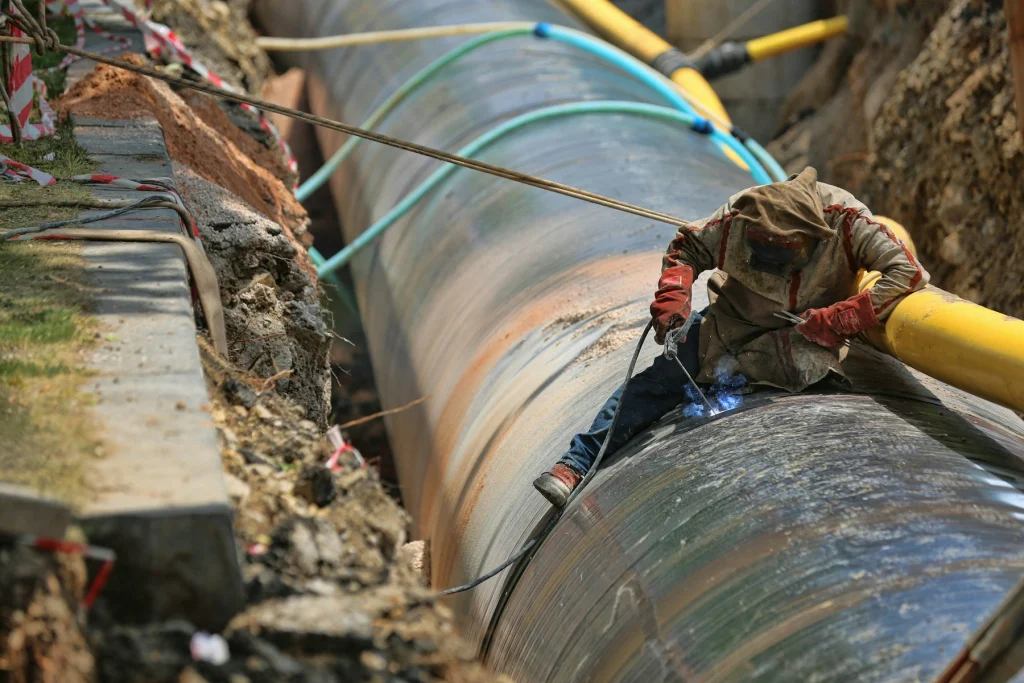
Successful plant shutdown welding starts months before the unit comes down. Freeze the welding scope early, order long-lead pipe, fittings and plate, confirm qualified procedures and welders for every material, and map permits, inspection and post-weld heat treatment into the schedule. Most turnaround overruns come from late scope, missing materials or emergent repairs nobody planned capacity for.
A shutdown compresses weeks of work into days, with the plant’s revenue offline the entire time. Welding is often the longest chain of dependent tasks: open the equipment, inspect, decide on repairs, cut out, fit, weld, heat treat, examine, test and close up. Every link depends on the one before it. This guide walks through how to plan that chain so welding supports the restart date rather than threatening it.
Key takeaways
- Lock the welding scope at a defined freeze date and route later additions through a formal change process.
- Identify long-lead materials, especially alloy pipe, forged fittings, flanges and specialty plate, as soon as the scope is drafted.
- Confirm qualified WPSs and welder qualifications for every material and code before mobilization.
- Build permit time, gas testing, fire watch, NDE and PWHT into each work package, not just the weld time.
- Reserve crew capacity and contingency for discovery work found when equipment is opened.
When should welding planning start for a turnaround?
For a major turnaround, planning typically begins many months ahead, sometimes a year or more for large refinery or petrochemical events. Smaller annual or semi-annual outages in manufacturing plants may need only a few months. The deciding factor is lead time on the slowest item: alloy materials, a specialty contractor, a crane or a third-party inspector booked across the region during the same season.
A useful rule is to work backward from the shutdown start. Leave time for scope development, engineering, procurement, fabrication of any prefabricated spools or supports, contractor onboarding and a final readiness review. If any of those steps cannot fit, the scope needs to shrink or the date needs to move. Deciding that early is far cheaper than deciding it mid-outage.
Building the welding scope
The welding scope pulls from several sources: inspection findings from the last outage, corrosion monitoring data, maintenance backlogs, capital project tie-ins and regulatory inspection requirements. Each item should become a defined work package with drawings or sketches, materials, joint counts, applicable code and acceptance criteria.
Separate known work from discovery work
Known work includes tie-ins, planned replacements and repairs already identified. Discovery work is what you find when you open a vessel, pull a bundle or strip insulation: thinned pipe, cracked nozzles, eroded internals, failed supports. You cannot list discovery items in advance, but you can estimate their likely volume from history and reserve crew hours, consumables and inspection capacity for them.
Walk the job before you price it
Drawings rarely show everything that slows a weld down. A pre-outage walkdown with the welding foreman, the area operator and the scaffold planner reveals access problems, interferences, insulation types, nearby live equipment that will affect hot work and where welding machines, gas bottles and heat treatment rigs can sit. Photos and field measurements taken during that walk often prevent fit-up surprises on tie-in day.
Prefabricate whatever you can
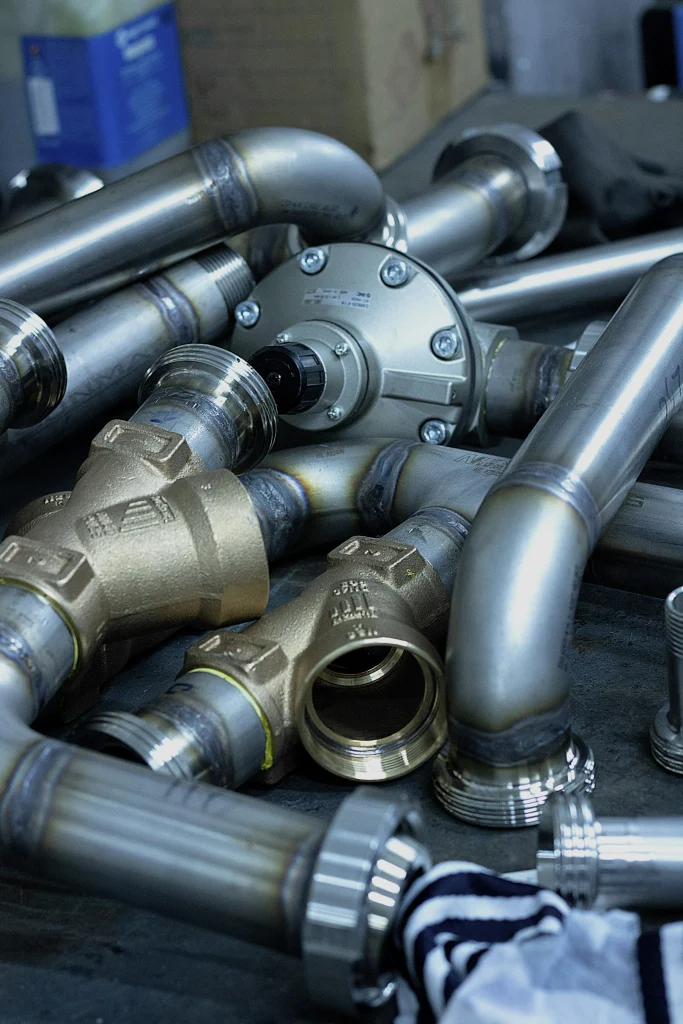
Every weld moved from the unit to the shop before the outage is a weld that does not compete for permits, scaffolding and access during it. Replacement spools, pipe supports, platform sections and wear liners can often be fabricated, examined and staged in advance. Field welds then shrink to the closing tie-in joints. Our pipe welding scopes routinely split work this way, with shop spools built and inspected ahead of the outage.
Materials and long-lead items
Material shortages are a frequent cause of turnaround delays. Common long-lead items include:
- Chrome-moly and stainless pipe and fittings in less common schedules or sizes.
- Forged flanges, special fittings and branch connections.
- Heavy plate, clad plate and abrasion-resistant plate.
- Specific filler metals matching alloy or toughness requirements.
- Gaskets, studs and bolting in alloy grades.
Order with mill test reports and confirm that materials meet the specification on arrival. Positive material identification on alloy components is common practice in refining and chemical plants, because a carbon steel fitting installed in a chrome line can fail in service. Stage materials by work package and tag them clearly so crews are not searching a laydown yard during the outage.
Procedures, qualifications and documentation
Every weld in the scope needs a qualified welding procedure under the governing code and a welder qualified to use it. Confirm this during planning, not on day one. If a new material or thickness requires a new PQR, that testing must happen well before the outage, since lab turnaround and impact testing can take weeks. Our guide to WPS and PQR documentation explains what to request.
Agree on the documentation package in advance: weld maps, welder identification on each joint, NDE reports, PWHT charts, hardness results and pressure test records. Turnaround data books are much easier to assemble when the format is settled before the first weld than when inspectors are chasing paperwork during restart.
What permits does plant shutdown welding require?
Permit requirements vary by facility and jurisdiction, but welding during a turnaround typically involves several overlapping permits and procedures:
- Hot work permits for welding, cutting and grinding, with gas testing, combustible removal or protection and a fire watch. See our guide to hot work permits and welding safety.
- Lockout/tagout and isolation for equipment being worked on, including blinding or disconnecting process lines.
- Line-break or equipment-opening permits for the first break into process systems.
- Confined space entry permits for work inside vessels, tanks, columns and other permit-required spaces, with atmospheric monitoring and attendants.
- Lifting and crane permits for heavy rigging of spools, vessel heads or structural members.
- Radiography exclusion permits when RT is performed, since radiation areas must be cleared and barricaded.
Facilities covered by OSHA’s process safety management standard also need management of change review for modifications that are not replacement in kind. Confirm the exact permit system and approval chain with the facility’s safety department, because practices differ widely.
Plan the permit window, not just the weld
A two-hour weld can easily need an hour of permit issue, gas testing and fire watch setup before it starts, plus a fire watch period after it ends. Multiply that across dozens of joints and permit time becomes a real scheduling line. Many owners batch permits by area and shift, assign dedicated permit issuers and stage fire watches to keep crews productive.
Scheduling welding on the critical path
Welding activities should be loaded into the turnaround schedule with realistic durations and every dependent step shown. For a typical pipe replacement, that sequence includes isolation, draining and purging, scaffold, insulation removal, cutting out, end preparation, fit-up, preheat, root pass, fill and cap, PWHT if required, NDE, repairs if any, pressure test, insulation and scaffold removal.
Common scheduling traps
- NDE bottlenecks. Radiography often runs at night or during shift changes to clear exclusion zones, so welds may wait hours for examination. Ultrasonic methods may reduce that friction where the code permits them.
- PWHT duration. Heat treatment cycles include controlled heating, a soak period and controlled cooling. A joint can be tied up for many hours, and equipment and technicians are finite.
- Repair loops. A rejected weld needs excavation, rewelding and re-examination. Schedule some repair allowance on critical joints.
- Access conflicts. Welding crews, insulators, scaffolders and inspectors often need the same space. Sequence by area to avoid stacking trades.
- Weather. Rain, wind and cold can stop outdoor welding or require shelters and additional preheat. Even in Texas, winter outages can meet hard freezes in North Texas and the Permian Basin, so plan enclosures and heat for them; on the Gulf Coast, summer heat and thunderstorms are the bigger planning factor.
Crew planning and shift structure
Turnarounds commonly run around the clock with extended shifts. That improves calendar time but raises fatigue risk, so staffing plans should include rotation, relief welders and enforced rest. Each welder needs site orientation, any required contractor safety training, badging and drug and alcohol screening per the facility’s rules, all completed before the outage begins.
Match welders to work packages by qualification. A crew heavy on carbon steel structural welders cannot absorb a sudden stainless or chrome-moly repair without the right qualified people. Ask contractors for a qualification matrix showing which welders hold which processes, positions and materials. Our plant maintenance crews are assigned this way, by qualification first and headcount second.
Handling emergent repairs without derailing the schedule
Discovery work is inevitable. The question is how quickly it moves from finding to decision to execution. Set up a daily emergent-work meeting with inspection, engineering, operations and the welding contractor. For each finding, decide whether to repair now, defer with a documented assessment, or replace. Have pre-approved repair procedures for common issues, such as weld overlay on thinned areas or replacing a corroded nozzle, so engineering review moves faster.
Repairs to code-stamped vessels may require an organization with the appropriate repair authorization and an inspector’s involvement, which takes time to arrange. Identify those vessels in advance. Our tanks and vessels repair page outlines which non-code repairs we handle and when an authorized repair organization must take the lead.
What drives the cost of turnaround welding?
Turnaround welding is priced differently from routine maintenance work, and the drivers are worth understanding before bids arrive. Labor is the largest piece, and it depends less on raw weld volume than on how much of each shift is productive. Permit waits, access delays and NDE holds all consume paid hours without laying down metal.
- Material and alloy. Stainless, chrome-moly and nickel alloys need slower welding, tighter heat input control and often purging, preheat and PWHT.
- Joint location. A weld at grade in the open goes far faster than the same weld on a pipe rack, inside a column or in a congested pump alley.
- Shift structure. Extended shifts, nights and weekends carry premium rates, and fatigue reduces output late in long shifts.
- Inspection extent. Higher percentages of radiography or ultrasonic examination add technician time and can add repair loops.
- Documentation. Detailed weld mapping, heat-number traceability and data book assembly take real labor.
- Contingency. How the owner and contractor handle discovery work, whether by unit rates, time and materials or a reserved crew, shapes the final number.
When comparing bids, ask each contractor to state its assumptions on productive hours per shift, NDE extent and documentation. Two quotes that look far apart often converge once those assumptions are put side by side.
Turnaround welding readiness checklist
- Scope frozen, with a change process for additions after the freeze date.
- Work packages complete: drawings, materials, joint counts, codes and acceptance criteria.
- Long-lead materials ordered, received, verified and staged by package.
- Shop prefabrication complete and inspected where possible.
- WPSs and PQRs confirmed for every material, thickness and process in scope.
- Welder qualification matrix reviewed and matched to work packages.
- Permit system, issuers and gas testing resources planned by area and shift.
- NDE, PWHT and pressure testing resources booked, with realistic durations scheduled.
- Crew orientation, badging and safety training completed before mobilization.
- Emergent-work process defined, with contingency hours and materials reserved.
- Documentation format agreed for weld maps, NDE reports and the final data book.
Frequently asked questions
How far ahead should we book a welding contractor for a turnaround?
As early as your scope allows. Turnaround seasons cluster in spring and fall in many regions, so qualified welders, NDE technicians and heat treatment crews get booked quickly. For a large outage, engaging the contractor several months out allows time for procedure review, prefabrication and crew qualification. Smaller outages may work with shorter notice if procedures already exist.
What is the difference between a shutdown and a turnaround?
The terms overlap. A shutdown usually means any planned stop of a unit or line for maintenance. A turnaround typically refers to a larger, scheduled event, often every few years, with major inspection, repair and project tie-in work. Both need the same welding discipline: defined scope, verified materials, qualified procedures and integrated permits and inspection.
How do we estimate discovery work?
Use historical data. Review how many emergent repairs past outages produced, broken down by equipment type and repair type, and how many welder hours they consumed. Combine that with current inspection data and equipment age. Reserve that capacity as contingency in crew plans, consumables and NDE bookings, and track its use daily.
Can welding continue at night during a turnaround?
Yes, many turnarounds run continuous shifts. Night work needs adequate lighting, the same permit and gas testing controls as day shift, and supervisors who can make decisions. Radiography is often scheduled at night to minimize disruption from exclusion zones. Fatigue management through rotation and rest periods matters more on extended night schedules.
What documents should we receive at the end of the outage?
Typically a weld map identifying each joint and welder, the WPSs used, welder qualifications, material certifications, NDE reports, PWHT charts where applicable, hardness results, pressure test records and any nonconformance reports with their resolution. Agree on the format before the outage so the data book is ready close to restart.
Plan the welding before the unit comes down
A turnaround rewards preparation and punishes improvisation. If your next outage includes piping tie-ins, support repairs, structural work or wear liner replacement, involve your welding contractor while the scope is still taking shape. Send Industrial Welding your outage window, scope list and drawings through the Get a Quote form, and we will return a free written quote with crew, material and inspection assumptions spelled out.